Biggest Sea Turtle in the World Amazes with Scale
- 1.
What Makes the Leatherback the Biggest Sea Turtle in the World?
- 2.
Do Giant Sea Turtles Still Exist Today? Let’s Set the Record Straight
- 3.
How Does the Biggest Sea Turtle in the World Compare to Other Marine Giants?
- 4.
The Secret Superpowers Behind the Biggest Sea Turtle in the World
- 5.
Where Can You (Rarely) Spot the Biggest Sea Turtle in the World?
- 6.
How Long Do the Biggest Sea Turtles Live? Separating Fact from Folklore
- 7.
Nesting Rituals of the Largest Sea Turtle on Earth
- 8.
Threats Facing the Biggest Sea Turtle in the World Today
- 9.
How Scientists Track the Movements of the Biggest Sea Turtle in the World
- 10.
Conservation Wins & How You Can Help the Largest Sea Turtle Alive
Table of Contents
Biggest Sea Turtle in the World
What Makes the Leatherback the Biggest Sea Turtle in the World?
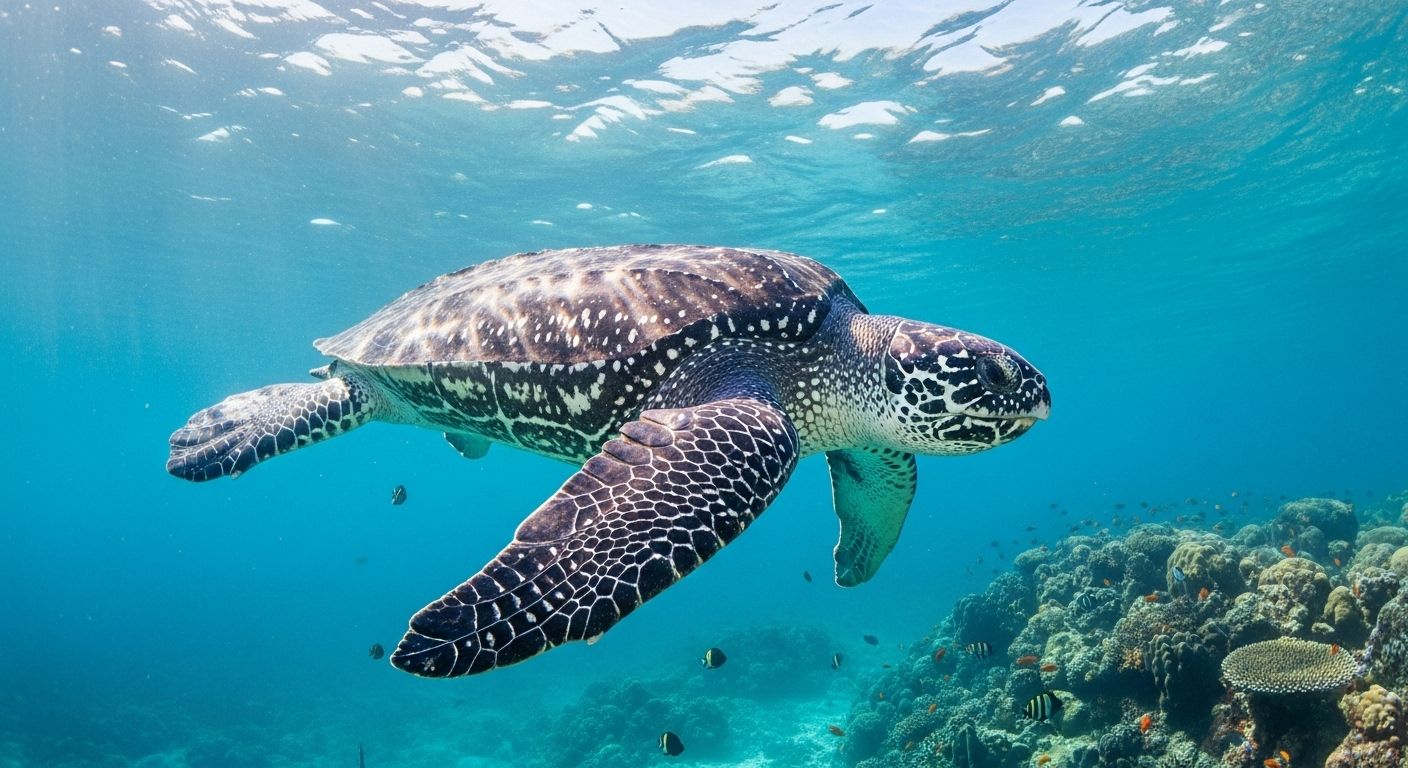
Ever seen somethin’ so massive it makes a pickup truck look like a Hot Wheels? Nah—unless you’ve locked eyes with a full-grown leatherback sea turtle, the undisputed heavyweight champ of the ocean’s reptile crew. We’re talkin’ the biggest sea turtle in the world, folks—not some beach-walkin’, sun-baskin’ tourist turtle. This fella ain’t got a hard shell; he’s rockin’ a leathery carapace like a linebacker in a raincoat. Record-breaking? Absolutely. The largest ever measured tipped the scales at a jaw-droppin’ 2,019 pounds (916 kg), stretched over 9 feet nose-to-tail, and carried enough muscle to swim across entire ocean basins like it’s just a jog ’round the block. Yeah, this ain’t no backyard pond dweller—this is *Dermochelys coriacea*, the OG deep-diver, clockin’ depths past 4,000 feet and migratin’ thousands of miles with GPS-level precision… no app needed.
Do Giant Sea Turtles Still Exist Today? Let’s Set the Record Straight
Y’all ever hear old salts spin yarns ’bout sea monsters the size of school buses? Well, hate to burst your bubble—but giant sea turtles still exist, and they’re swimmin’ right now, way out yonder where the blue goes black. Nope, no myth. The leatherback—again, the biggest sea turtle in the world—is very much alive and kickin’, though dang near hangin’ on by a thread. Global populations dropped over 40% in three generations (that’s IUCN talk for “we’re in trouble, Houston”). Still, off the coasts of Costa Rica, Trinidad, and even Oregon (yep, Oregon!), leatherbacks pop up like surprise guests at a beach BBQ—silent, ancient, and slightly bewildered by your plastic straw collection. They ain’t *Archelon*—that Cretaceous beast clocked 15 feet and 4,900 lbs—but today’s giants? Still qualify as absolute unit material.
How Does the Biggest Sea Turtle in the World Compare to Other Marine Giants?
Size & Scale: Leatherback vs. The Ocean’s Heavy Hitters
Let’s line ’em up like contenders at a county fair weigh-in. When it comes to the biggest sea turtle in the world, the leatherback leaves the rest in its hydrodynamic wake. Below’s a quick showdown (all sizes ≈ adult averages):
| Species | Max Length | Max Weight | Shell Type |
|---|---|---|---|
| Leatherback (Dermochelys coriacea) | 3–9 ft (1–2.8 m) | 500–2,019 lbs (227–916 kg) | Leathery, oil-slicked, no scutes |
| Green Sea Turtle | 3–4 ft | 300–500 lbs | Hard, smooth, heart-shaped |
| Loggerhead | 2.5–3.5 ft | 175–1,000 lbs* | Hard, blocky, reddish-brown |
| Kemp’s Ridley | 2–2.5 ft | 75–100 lbs | Hard, rounded, olive-gray |
*Rare loggerheads can hit 1,000 lbs, but still—no match for our leatherback legend. The biggest sea turtle in the world ain’t flexin’ just for show: that bulky frame powers a heart that can slow to *one beat per minute* during deep dives. Now *that’s* chill. Real chill.
The Secret Superpowers Behind the Biggest Sea Turtle in the World
Y’know how your car overheats if you idle too long? The leatherback? Nah. This beast’s got built-in *thermal regulation*—counter-current heat exchange in its flippers and a layer of oily fat under its skin—that lets it cruise Arctic waters like it’s Miami in July. That’s right: the biggest sea turtle in the world winters off Newfoundland and summers near Suriname. Talk about range anxiety solved. Plus, its jaws? Specialized for jellyfish—its favorite snack—and lined with backward-pointing spines so prey can *enter*, but never exit. Not cruel—just efficient. And those flippers? Longer than your kayak paddle (up to 7 ft wingspan!), shaped like hydrofoils, pushin’ 22 mph in short bursts. Ain’t no turtle this big movin’ slow—unless it’s digestin’ a moon jelly buffet.
Where Can You (Rarely) Spot the Biggest Sea Turtle in the World?
Lookin’ to meet the biggest sea turtle in the world face-to-flipper? Pack patience—and maybe a boat. Leatherbacks avoid shallow reefs and snorkel zones like the plague. They prefer the *pelagic highway*: open ocean, deep channels, continental shelves where jellies bloom thick as summer fog. Prime spotting zones? Trinidad’s Grande Riviere (nesting season: March–July), Playa Grande in Costa Rica (Oct–Mar), and—wild card—Cape Cod Bay, where cold-stunned adults sometimes wash up each fall (rescue teams swoop in; shoutout to Mass Audubon). Stat time: only ~34,000 adult females remain globally. So if you *do* see one? Snap a pic, whisper a thanks, and *don’t* chase it. That turtle’s been swimmin’ since before your Wi-Fi password existed.
How Long Do the Biggest Sea Turtles Live? Separating Fact from Folklore
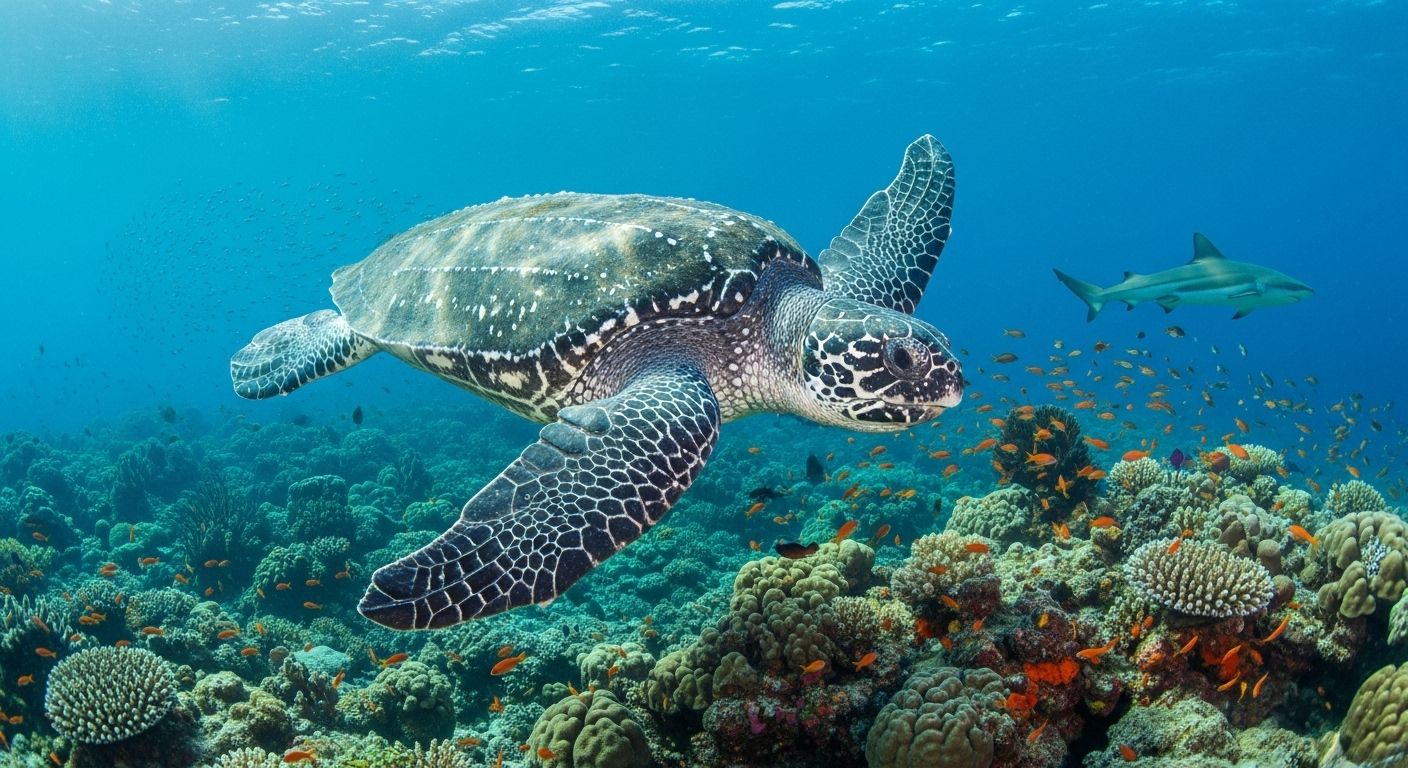
“Is there a 500-year-old turtle?”—asked every kid after watchin’ *Avatar*. Short answer? Nope. Long answer? Still nope—but close enough to spark wonder. Leatherbacks (the biggest sea turtle in the world) likely live 45–90 years. Not 500. (That myth probably stems from giant *tortoises* like Jonathan of St. Helena—born 1832, still kickin’ at ~192. Respect.) Snapping turtles? Even wild ones top out around 100 years—and a “100-year-old snapping turtle” usually measures 12–18 inches, up to 75 lbs. Big? Yeah. Bigger than a leatherback? *Hard pass.* Sea turtles grow fast early, then plateau. Age estimation’s tricky—no rings like trees—but scientists use skeletochronology (bone layers) and satellite tag histories. One tagged female returned to nest *21 years later*. Same beach. Same sand. She remembered. Chills.
Nesting Rituals of the Largest Sea Turtle on Earth
Imagine draggin’ 1,500 lbs of pure evolutionary awesomeness onto a moonlit beach, diggin’ a 3-foot hole with hind flippers, and layin’ 80–100 golf-ball-sized eggs—*all while blind as a cavefish*. That’s the leatherback mama, doin’ her part to keep the biggest sea turtle in the world swimmin’. She doesn’t stick around for baby showers; eggs incubate 60–70 days, hatchlings scramble solo into the surf, and only 1 in 1,000 survives to adulthood. Why? Light pollution, predators, fishing nets. But here’s the kicker: leatherbacks use *geomagnetic imprinting*. Yep—they memorize Earth’s magnetic field at birth, then navigate back decades later to nest *within miles* of where they hatched. GPS? Nah. They were born with celestial Wi-Fi.
Threats Facing the Biggest Sea Turtle in the World Today
Hold up—before you book that “swim with giants” eco-tour: the biggest sea turtle in the world is in hot water (literally). Climate change warps sand temps—skewing hatchling sex ratios (warmer = more girls; too warm = all girls → population crash). Bycatch kills ~4,600 leatherbacks yearly in Pacific longline fisheries alone. And plastic? A 2019 necropsy found *1,020 pieces* of plastic in one leatherback’s gut—confused for jellyfish. They’re also vulnerable to oil spills (their skin absorbs toxins like a sponge) and coastal development (nesting beaches vanishing faster than snow in July). Bottom line: seeing one in the wild feels like witnessin’ a living fossil. Treat it like the miracle it is.
How Scientists Track the Movements of the Biggest Sea Turtle in the World
Ever wonder how we *know* these nomads trek 12,000 miles round-trip? Satellite tags, baby. Tiny transmitters glued to the shell ping location data every time the turtle surfaces to breathe. One tagged fella—dubbed “Esperanza”—swam from Indonesia to Oregon in 647 days. That’s *Portland via Jakarta*, powered by jellyfish and instinct. Scientists use this intel to map migration corridors, lobby for seasonal fishing bans, and even predict nesting surges. Fun fact: leatherbacks don’t hibernate—they *dive deeper* in winter to stay warm, using ocean thermoclines like thermal blankets. Tracking the biggest sea turtle in the world isn’t just cool science; it’s lifeline work.
Conservation Wins & How You Can Help the Largest Sea Turtle Alive
Alright, enough doomscrollin’. Good news *does* exist. Since TEDs (Turtle Excluder Devices) became mandatory in US shrimp trawls, sea turtle deaths dropped 44%. Trinidad’s community-led patrols boosted leatherback nesting by 600% since the ’90s. And in 2024, NOAA expanded the Pacific Leatherback Critical Habitat Zone by 102,000 sq mi. So yeah—hope floats. How you help?
- Skip single-use plastics—especially bags and straws (jellyfish look-alikes).
- Support orgs taggin’, rescuin’, and educatin’ (like Sea Turtle Conservancy).
- Choose sustainable seafood certified by MSC or Seafood Watch.
- Volunteer at a nest-monitoring program—or just dim beachfront lights May–July.
Frequently Asked Questions
What is the biggest sea turtle ever recorded?
The biggest sea turtle ever recorded was a leatherback (Dermochelys coriacea) found on a Welsh beach in 1988—measuring 9 feet 5 inches (2.87 m) and weighing 2,019 lbs (916 kg). This specimen remains the official Guinness World Record holder and is, without contest, the biggest sea turtle in the world.
Do giant sea turtles still exist?
Yes—giant sea turtles still exist! The leatherback, the biggest sea turtle in the world, is alive and migratin’ across all major oceans today. Though endangered, nesting populations persist in the Caribbean, Southeast Asia, and the eastern Pacific. They’re not *dinosaur*-sized, but at nearly a ton and near-3-meter length, they’re giants by any modern standard.
How big is a 100 year old snapping turtle?
A 100-year-old snapping turtle (usually *Chelydra serpentina*) typically reaches 12–18 inches in carapace length and 50–75 lbs—rarely up to 100 lbs. While impressively old and grumpy, it’s *not* the biggest sea turtle in the world; leatherbacks dwarf them by 10x in weight. Age ≠ size in the turtle world—growth slows dramatically after maturity (~15–20 years).
Is there a 500 year old turtle?
No verified sea turtle has lived 500 years—and no, the biggest sea turtle in the world doesn’t come close. The oldest *confirmed* sea turtle was ~100. However, *land* tortoises like Jonathan (a Seychelles giant tortoise) are estimated at 192 years (born 1832), making him the oldest living land animal—but still shy of 500. That number? Pure legend (and very bad math).
References
- https://www.guinnessworldrecords.com/world-records/largest-leatherback-sea-turtle
- https://www.iucnredlist.org/species/6471/141910243
- https://www.noaa.gov/education/resource-collections/marine-life/sea-turtle-faq
- https://www.seaturtlesurvival.org/leatherback-life-history