Soft Back Turtle Pancake Flap Secret
- 1.
Wait—Did That Turtle Just Melt Into the Mud?
- 2.
Leather Over Armor: What Makes a Soft Back Turtle “Soft”?
- 3.
Meet the Crew: Common Types of Soft Back Turtles in the U.S.
- 4.
Habitat Hideouts: Where Do Soft Back Turtles Live?
- 5.
Speed, Snorkels, and Survival: Anatomy of a River Phantom
- 6.
Temperament Talk: Are Soft Back Turtles Friendly—or Fiery?
- 7.
Hands Off: Can You Touch a Soft Back Turtle?
- 8.
Ecosystem Engineers: What’s the Point of a Soft Back Turtle?
- 9.
Pet Trade Pitfalls: Should You Keep One at Home?
- 10.
Myths, Muck, and Moving Forward
Table of Contents
soft back turtle
Wait—Did That Turtle Just Melt Into the Mud?
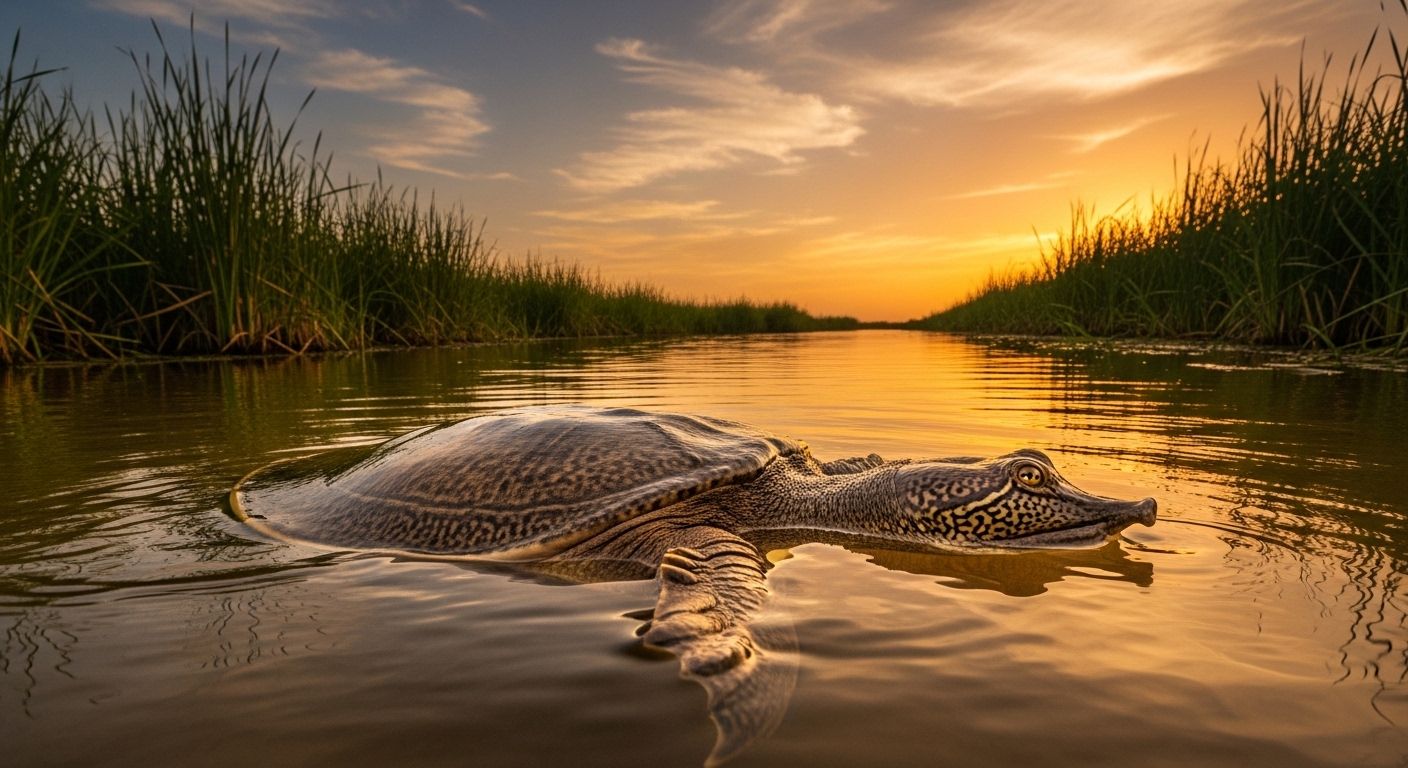
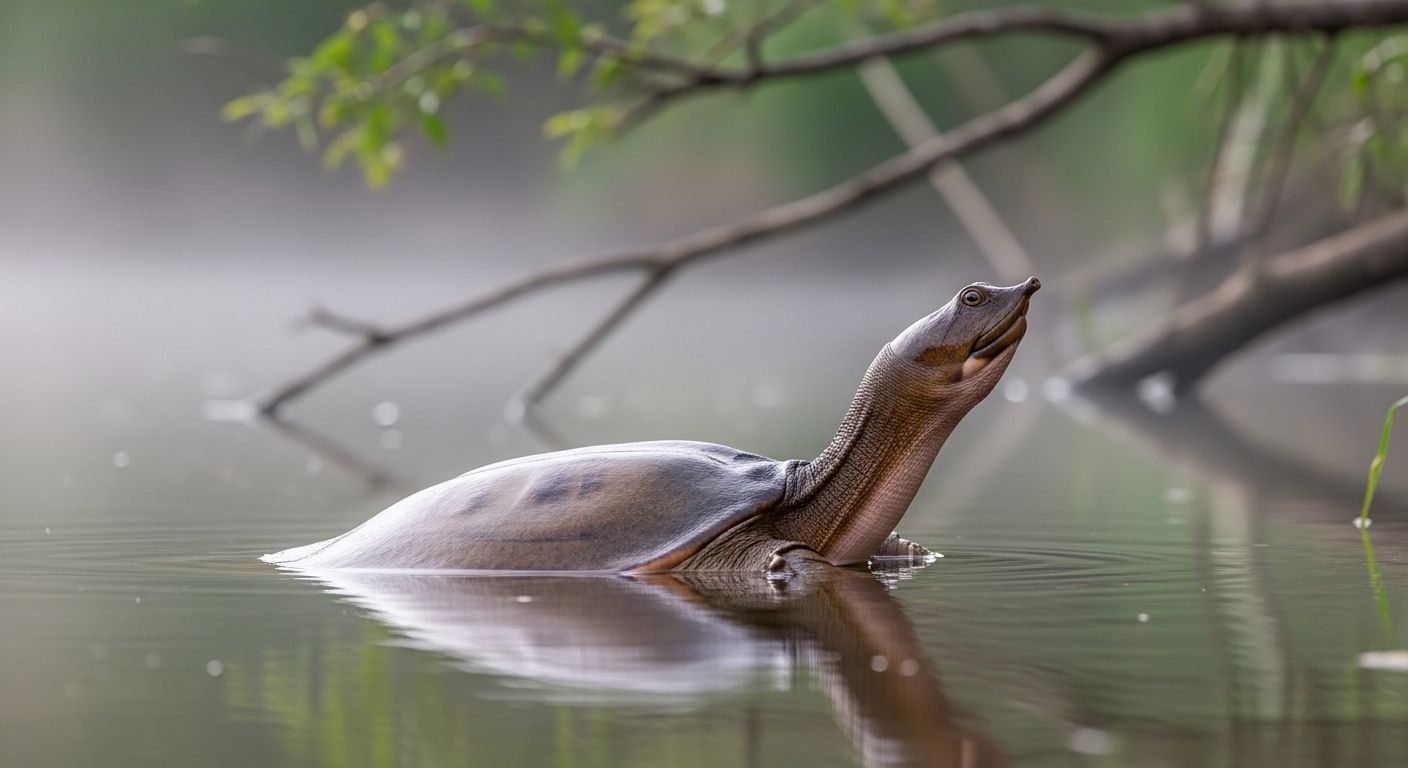
Ever been wadin’ through a warm Georgia creek, feel somethin’ slick zip between your toes like a wet pancake with attitude, and look down to see nothin’ but ripples? Congrats—you just brushed shoulders with a soft back turtle, nature’s answer to “What if a turtle ditched its armor for speed?” These ain’t your grandma’s box turtles. Nope. The soft back turtle—more commonly called the softshell turtle—looks like it forgot to finish growin’ its shell, leavin’ behind a leathery, flexible carapace that feels more like a drumhead than bone. And that long neck? That snorkel-like snout? Pure ambush predator chic. So before you write ‘em off as “weird,” let’s dive into the muddy magic of one of North America’s most misunderstood reptiles.
Leather Over Armor: What Makes a Soft Back Turtle “Soft”?
Alright, y’all—let’s clear the fog. A soft back turtle isn’t broken or sick; it’s brilliantly adapted. Unlike hard-shelled cousins (think sliders or box turtles), softshells belong to the family *Trionychidae*, and their carapace lacks the keratin scutes that make other shells rigid. Instead, it’s covered in smooth, rubbery skin stretched over bone—a design built for speed, stealth, and sinkin’ into sand like a ghost. Their limbs are webbed like flippers, their claws sharp for diggin’, and their heads? Long enough to poke above water while the rest stays buried. This ain’t weakness—it’s evolution leanin’ hard into “hide-and-strike.” The soft back turtle trades brute defense for agility, and in the murky shallows, that gamble pays off big time.
Meet the Crew: Common Types of Soft Back Turtles in the U.S.
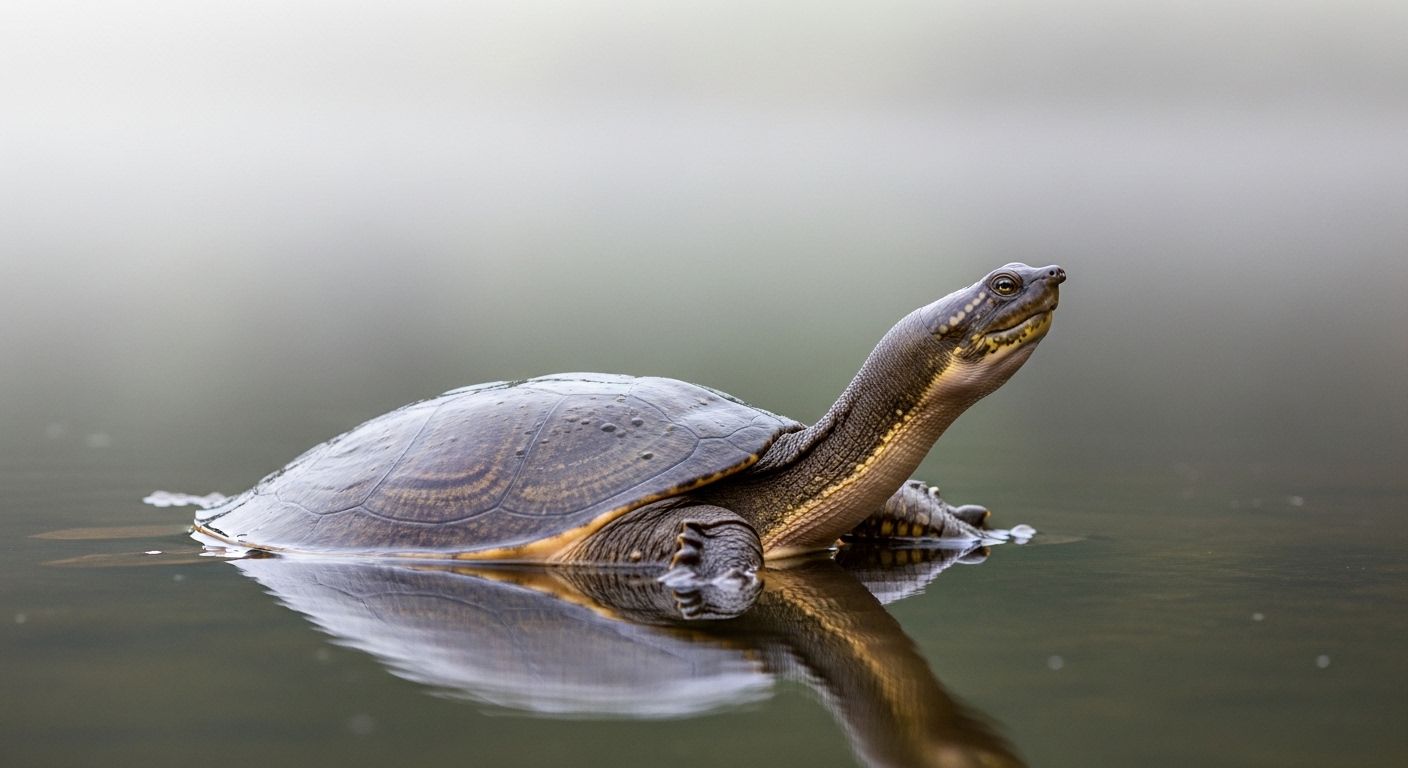
You might think there’s just one soft back turtle, but nah—America’s got a whole squad. The **spiny softshell** (*Apalone spinifera*) sports tiny spines along its shell edge and ranges from coast to coast. The **smooth softshell** (*Apalone mutica*)? Sleek as silk, found mostly in the Mississippi basin. Down South, the **Florida softshell** (*Apalone ferox*) grows massive—up to 24 inches—and looks like it’s wearin’ war paint with its bold yellow markings. All share that signature leathery shell, snorkel snout, and lightning-fast strike. Spot one basking on a sandbar, and you’ll notice how flat they lie—like a deflated whoopee cushion with eyes. But don’t blink; the soft back turtle vanishes faster than gossip at a church picnic.
Habitat Hideouts: Where Do Soft Back Turtles Live?
If you’re huntin’ a soft back turtle, forget deep lakes or rocky streams. These fellers crave **sandy-bottomed rivers**, **shallow oxbows**, **muddy ponds**, and **slow-moving creeks** with plenty of sun and zero traffic. They need soft substrate to bury themselves—sometimes for hours—leavin’ only eyes and nostrils exposed. Think of ‘em as underwater ninjas: motionless till dinner swims by, then *whoosh*—gulped in one go. States like Texas, Louisiana, Missouri, and Florida are hotspots, but you’ll find ‘em as far north as Wisconsin. Just remember: clean water matters. Polluted or silt-choked habitats? The soft back turtle packs up and ghosts.
Speed, Snorkels, and Survival: Anatomy of a River Phantom
Let’s geek out on gear. The soft back turtle is built like a reptilian torpedo:
- Leathery carapace: flexible, hydrodynamic, perfect for burrowing
- Elongated snout: functions like a snorkel—breathe while fully submerged
- Webbed feet with claws: paddle fast, dig deep, grip mud like Velcro
- Long neck: strikes prey from a distance without movin’ the body
Temperament Talk: Are Soft Back Turtles Friendly—or Fiery?
Now, y’all asked: “Are softshell turtles friendly?” and “Is a softshell turtle aggressive?”—and here’s the real tea. In water? Total chill. They’d rather vanish than fight. But on land? Oh boy. With stubby legs and a heavy body, they feel exposed—and that’s when the claws come out. A cornered soft back turtle will hiss, lunge, and deliver a bite that stings like fire (their jaws are strong, and those beaks? Razor-sharp). They’re not “mean”—they’re scared. And unlike box turtles, they can’t retreat into a shell, so defense is their only play. So no, they ain’t “friendly” pets—but in the wild, they’re peaceful phantoms. Respect their space, and the soft back turtle won’t give you a second glance.
Hands Off: Can You Touch a Soft Back Turtle?
Short answer? **Don’t.** First, their skin is delicate—oils from human hands can damage their protective mucus layer, openin’ doors to infection. Second, they’re lightning-fast and will twist to bite if handled. Third—and this matters—many states protect native turtles, and harassin’ or capturing ‘em without permits is illegal. Even if you mean well, pickin’ up a soft back turtle stresses it out and risks injury to both of y’all. If you spot one crossin’ a road? Gently nudge it forward with a stick in the direction it was headin’. But never grab, flip, or “rescue” it. The soft back turtle knows exactly what it’s doin’.
Ecosystem Engineers: What’s the Point of a Soft Back Turtle?
“What’s the point?”—as if nature needs justification! But fine, let’s break it down. The soft back turtle is a keystone scavenger and predator. It cleans up dead fish, controls insect and amphibian populations, and aerates riverbeds while diggin’—which helps aquatic plants thrive. Plus, its presence signals healthy, unpolluted water. No softshells? That’s a red flag for ecosystem imbalance. They’re not “just another turtle”; they’re underwater janitors with PhDs in survival. Lose the soft back turtle, and the whole wetland web starts fraying at the edges.
Pet Trade Pitfalls: Should You Keep One at Home?
Look, we get it—their alien looks are hypnotic. But keepin’ a soft back turtle as a pet? Only for experts with serious cash and space. They need massive tanks (100+ gallons), powerful filtration (they’re messy eaters), deep sandy bottoms, and live food. Captive-bred juveniles cost $100–$300 USD, but adults? Rare and pricey. Worse, wild-caught individuals rarely adapt—they stress easy, refuse pellets, and often die within months. And ethically? Removing them harms fragile populations. If you crave a shelled companion, adopt a rescued red-eared slider instead. The soft back turtle belongs in rivers—not in a basement tank under LED lights.
Myths, Muck, and Moving Forward
Time to bust myths: No, softshells don’t “suck the blood” of swimmers (that’s old wives’ tales). No, they won’t chase you (they’re too busy hidin’). And no, their shells aren’t “defective”—they’re evolutionary masterpieces. The best thing we can do for the soft back turtle is protect rivers, reduce runoff, and stop treatin’ ‘em like curiosities. Curious to learn more? Start at the homepage of Sea Turtle Farm, explore our full Species catalog, or dive into another oddball in our feature: Softshell Snapping Turtle Hybrid Monster. Every bit of awareness keeps these river ghosts glidin’ through the mud.
Frequently Asked Questions
Are softshell turtles friendly?
Softshell turtles are not “friendly” in the pet sense—they’re wild animals that avoid humans. While calm in water, a soft back turtle may bite defensively if handled, as it cannot retract into its shell for protection.
Can you touch a softshell turtle?
It’s best not to touch a soft back turtle. Their skin is sensitive, handling causes stress, and they can deliver painful bites. Additionally, many states prohibit disturbing native turtles without permits.
What's the point of a softshell turtle?
The soft back turtle plays a vital ecological role as a scavenger and predator, helping maintain clean waterways and balanced aquatic ecosystems across North America.
Is a softshell turtle aggressive?
A soft back turtle is not inherently aggressive but will defend itself fiercely if threatened on land. In water, it prefers to flee or hide, using its camouflage rather than confrontation.
References
- https://www.fws.gov/species/softshell-turtles-apalone-spp
- https://www.iucnredlist.org/species/38526/142809631
- https://academic.oup.com/bioscience/article/71/8/789/6295321
- https://www.virginiaherpetologicalsociety.com/reptiles/turtles/spiny-softshell/