Turtle Enclosure Indoor Space Saver Hack
- 1.
What Kind of Enclosure Do Turtles Need Indoors?
- 2.
Size Isn’t Just a Number—It’s Survival
- 3.
Temperature Control: Keep It Cozy, Not Frosty
- 4.
Lighting: UVB Ain’t Optional
- 5.
Substrate & Humidity: Ground Rules Matter
- 6.
Water Features: Even Land Turtles Need a Dip
- 7.
Hiding Spots & Enrichment: Mental Health Is Real
- 8.
Filtration & Cleaning: Keep It Fresh, Not Funky
- 9.
Cost Breakdown: What’s This Gonna Cost Ya?
- 10.
Common Mistakes (And How to Dodge ‘Em)
Table of Contents
turtle enclosure indoor
Y’all ever tried buildin’ a turtle palace in your living room and ended up with a swampy mess that smells like regret and algae? Yeah, we’ve been there too. But here’s the thing—turtles ain’t just “set ‘em and forget ‘em” pets. Whether you’re rockin’ a box turtle, a painted pal, or some other shelled sweetheart, an indoor turtle enclosure indoor has gotta be more than a plastic bin with a heat lamp duct-taped to the side. It needs to feel like home—even if “home” is technically a forest floor or a slow-moving creek. So grab your coffee (or sweet tea, no judgment), ‘cause we’re walkin’ through how to build a turtle enclosure indoor that’s cozy, clean, and 100% turtle-approved.
What Kind of Enclosure Do Turtles Need Indoors?
First off, not all turtles are created equal. A red-eared slider wants deep water; a box turtle craves leaf litter and humidity. But one rule holds true across the board: your turtle enclosure indoor must replicate their natural biome as closely as possible [[2]]. That means substrate, temperature gradients, hiding spots, UVB lighting, and proper ventilation. Skip any of these, and you’re not just housin’ a turtle—you’re stressin’ one out. And stressed turtles don’t eat, don’t bask, and definitely don’t thrive.
Size Isn’t Just a Number—It’s Survival
Here’s a hard truth: most folks start with enclosures that are way too small. A juvenile might fit in a 20-gallon tank, but adults? Box turtles need at least 4 ft² of floor space per turtle [[5]]. Aquatic species? Think 10 gallons per inch of shell length. Your turtle enclosure indoor should allow full movement—walking, digging, swimming, or burrowing, depending on species. Cramped quarters lead to muscle atrophy, shell deformities, and behavioral issues. Bigger isn’t just better—it’s non-negotiable.
Temperature Control: Keep It Cozy, Not Frosty
How cold is too cold for a turtle? Good question. Most temperate species start slowing down below 60°F—and below 50°F, they risk hypothermia [[9]]. A proper turtle enclosure indoor uses a dual-thermostat setup: a warm side (80–85°F) and a cool side (70–75°F). Night temps can dip slightly but never below 65°F for tropical species or 60°F for temperate ones. Use digital thermometers—not guesswork—and invest in ceramic heat emitters for nighttime warmth without light disruption.
Lighting: UVB Ain’t Optional
Turtles don’t tan for fun—they need UVB to synthesize vitamin D3 and absorb calcium. Without it, metabolic bone disease turns shells soft and limbs weak. A quality turtle enclosure indoor includes a linear UVB 5.0 or 10.0 tube (depending on species) spanning ⅔ of the enclosure, replaced every 6–12 months [[7]]. Place it within 12 inches of the basking zone, and never behind glass—it blocks UVB like sunscreen on a cloudy day. This ain’t luxury; it’s lifeline.
Substrate & Humidity: Ground Rules Matter
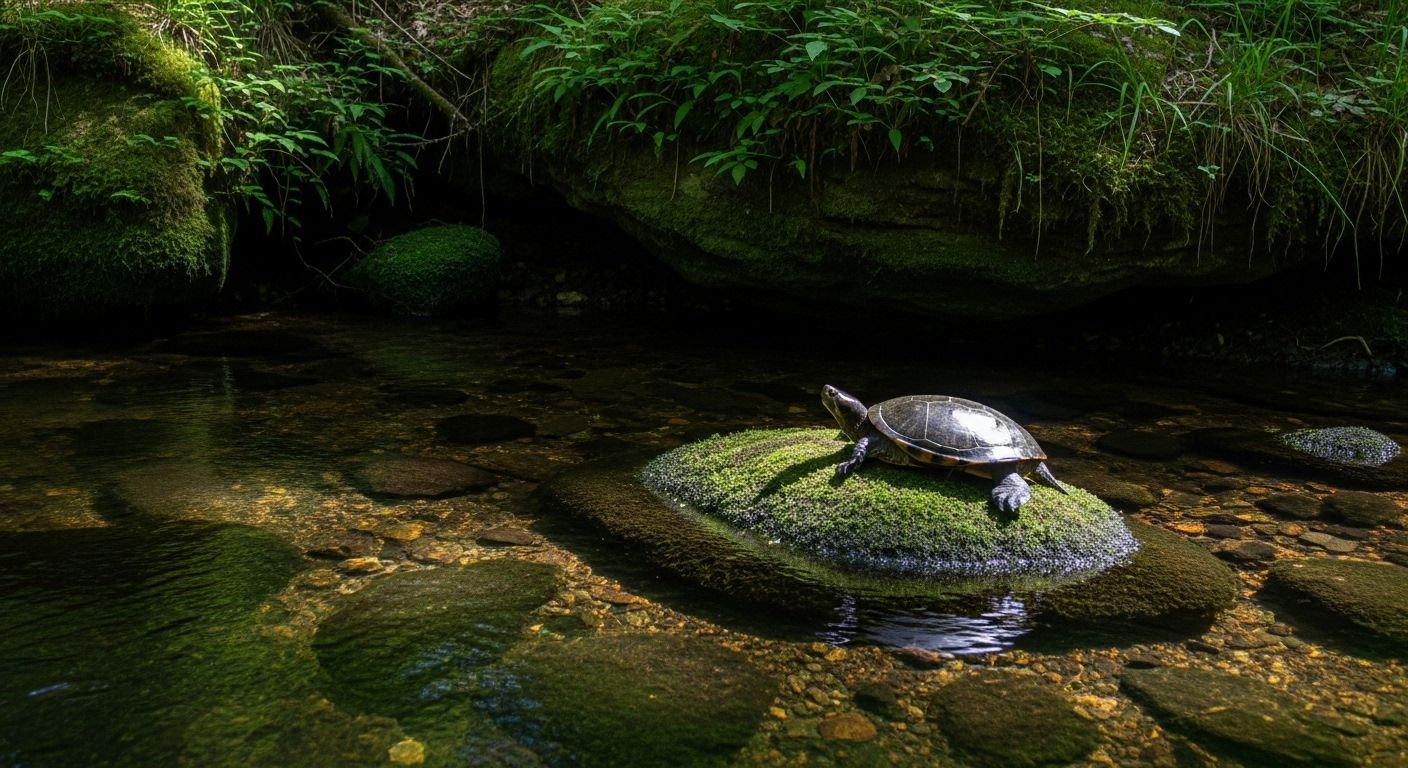
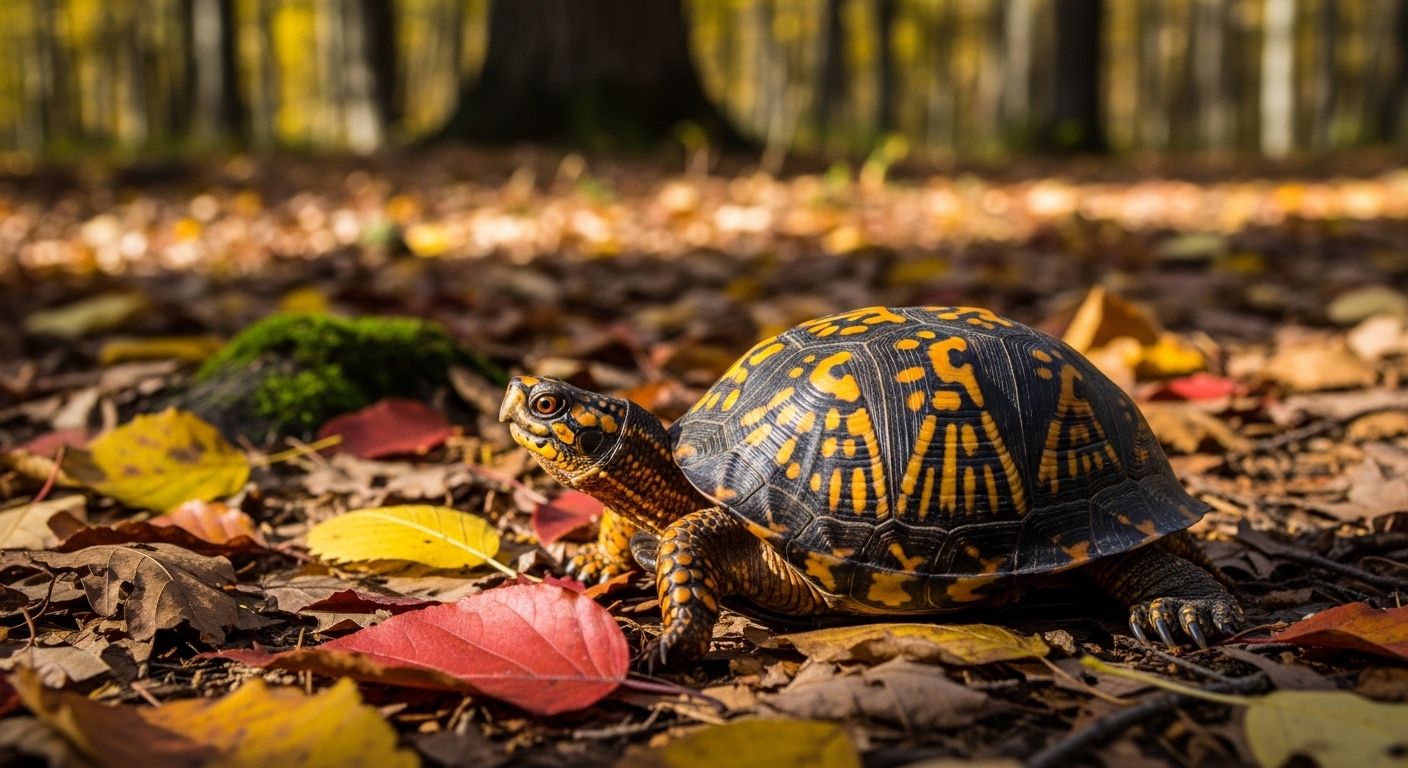
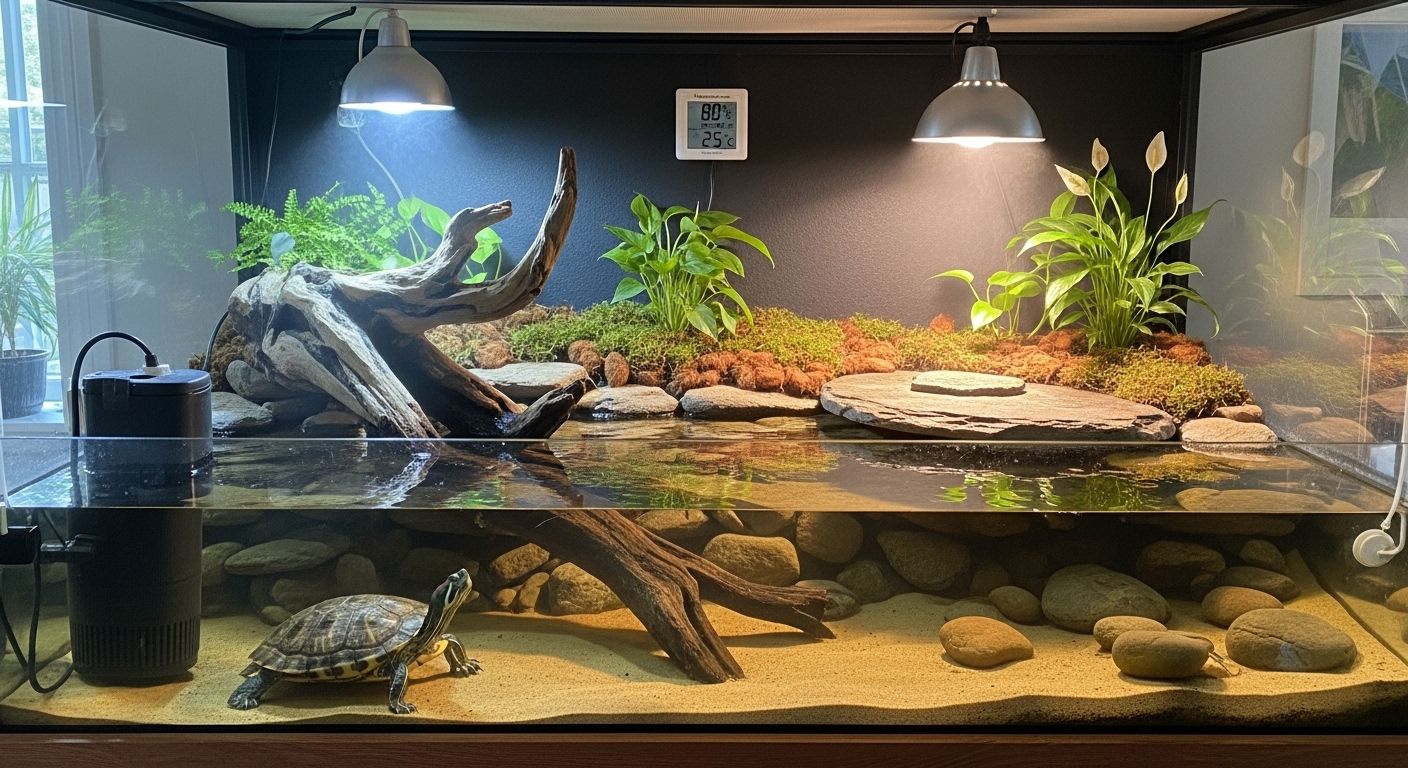
Dry, dusty floors? Big no-no for forest-dwellers like box turtles. Their turtle enclosure indoor needs moisture-retentive substrate: coconut fiber, cypress mulch, or orchid bark. Keep humidity between 60–80% with daily misting and a shallow water dish. Aquatic turtles? Bare-bottom tanks or large river stones (too big to swallow) prevent impaction. Avoid sand, gravel, or pine shavings—they cause respiratory issues or gut blockages faster than you can say “vet bill.” Check out this ideal setup:
Water Features: Even Land Turtles Need a Dip
Even terrestrial turtles like box turtles need access to clean, shallow water for soaking and drinking. In your turtle enclosure indoor, include a water dish large enough for full-body submersion but shallow enough to exit easily. Change it daily—stagnant water breeds bacteria. For semi-aquatic species, integrate a filtered water zone with a gentle slope or ramp. Remember: hydration = healthy kidneys = happy turtle.
Hiding Spots & Enrichment: Mental Health Is Real
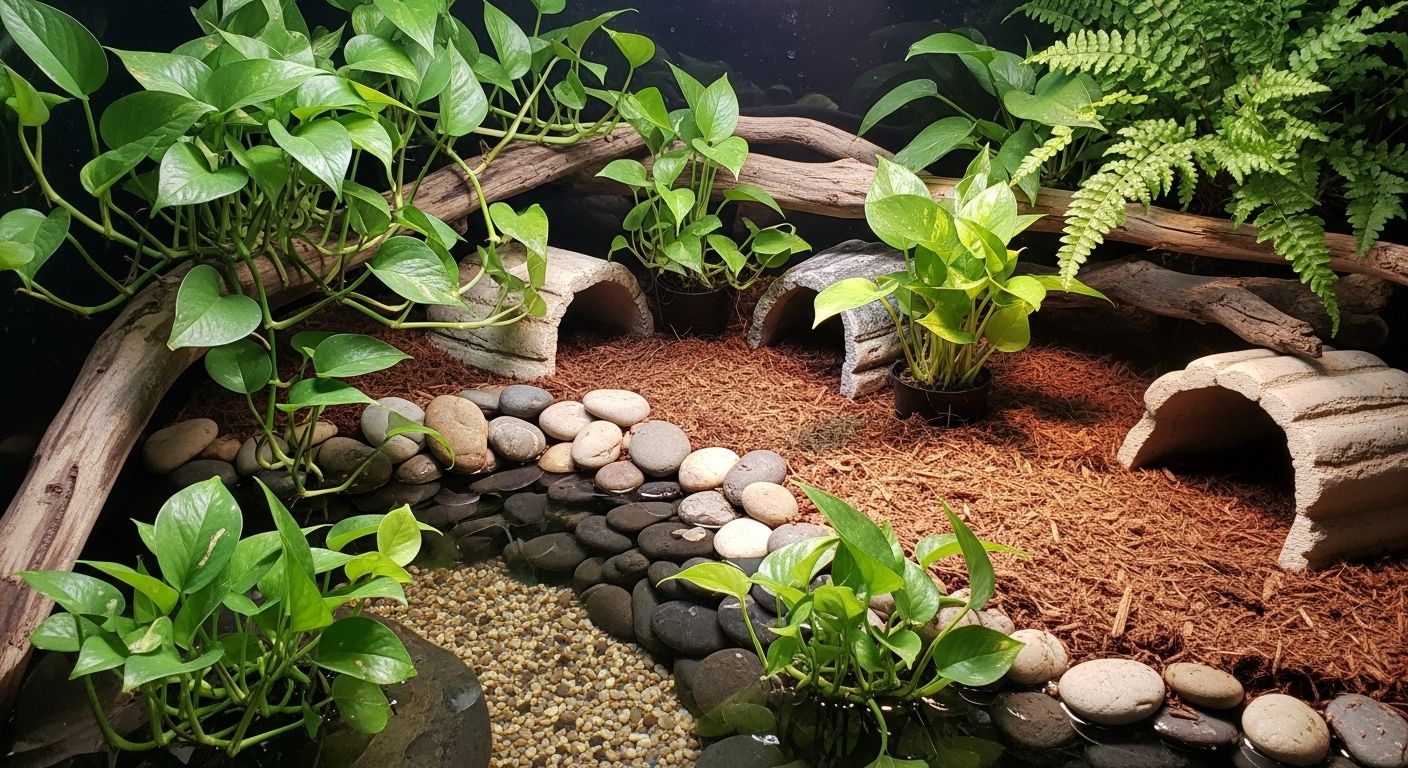
A bare tank is a boring tank. Turtles get stressed without cover. Add cork bark hides, half-logs, or DIY caves made from food-safe resin. Rotate enrichment items monthly: moss patches, edible flowers, or puzzle feeders with mealworms hidden inside. A stimulated turtle explores, forages, and basks with confidence. In your turtle enclosure indoor, variety isn’t just spice—it’s sanity.
Filtration & Cleaning: Keep It Fresh, Not Funky
Let’s be real—turtles are messy. They poop where they eat, shed skin, and track substrate everywhere. A solid turtle enclosure indoor for aquatic or semi-aquatic species demands a canister filter rated for 2–3x tank volume. Spot-clean daily, do full substrate changes monthly, and disinfect hides weekly with reptile-safe cleaner. No bleach near your buddy—ever. Cleanliness prevents shell rot, eye infections, and ammonia burns.
Cost Breakdown: What’s This Gonna Cost Ya?
Building a proper turtle enclosure indoor ain’t cheap—but it’s cheaper than emergency vet care. Budget breakdown: - Enclosure (48"x24" tub or custom build): $100–$250 - Heat + UVB lighting: $80–$120 - Thermostat + thermometers: $40 - Substrate + decor: $50 - Water dish / filter: $60–$150 Total startup: $330–$610 USD. Monthly upkeep (electricity, substrate, food): ~$30. Think of it as rent for your shelled roommate—who, by the way, might live 30+ years [[11]].
Common Mistakes (And How to Dodge ‘Em)
We’ve seen it all: using heat rocks (burn hazard!), skipping UVB (“they get sun through the window”—nope, glass blocks UVB), or housing multiple males together (hello, aggression). Another classic? Ignoring species-specific needs. A desert tortoise ≠ a box turtle ≠ a slider. Your turtle enclosure indoor must match biology, not convenience. And please—don’t release captives outdoors. That’s how invasive populations start. If you’re serious about doing this right, start with the basics from Sea Turtle Farm, explore more setups in our Habitat section, or dive into ocean conservation with our piece: Leatherback Sea Turtle Environment Plastic Killer.
Frequently Asked Questions
What is the best indoor habitat for a box turtle?
The best indoor habitat for a box turtle is a spacious turtle enclosure indoor with moisture-retentive substrate (like coconut fiber), 60–80% humidity, a shallow water dish, hiding spots, a temperature gradient of 70–85°F, and full-spectrum UVB lighting for 10–12 hours daily.
How to make an indoor turtle habitat?
To make an indoor turtle habitat, choose an appropriately sized enclosure, add species-specific substrate, install heat and UVB lighting, provide fresh water, include hiding spots, and maintain proper temperature and humidity. Every element of the turtle enclosure indoor should mimic the turtle’s natural environment.
How cold is too cold for a turtle?
Temperatures below 60°F are too cold for most temperate turtles, and below 50°F can be life-threatening. A well-maintained turtle enclosure indoor should never drop below 60–65°F, depending on species, to prevent hypothermia and immune suppression.
What kind of enclosure do turtles need?
Turtles need a species-appropriate turtle enclosure indoor that provides adequate space, correct temperature and humidity, UVB exposure, clean water, safe substrate, and environmental enrichment. The setup must reflect whether the turtle is aquatic, semi-aquatic, or terrestrial.
References
- https://www.aquaticcommunity.com/box_turtle_care/
- https://www.reptilesmagazine.com/care-sheets/turtles-tortoises/eastern-box-turtle-care-sheet/
- https://www.petmd.com/reptile/care/evr_re_box_turtle_care
- https://www.turtlecare.net/indoor-habitats/
- https://www.anapsid.org/box.html
- https://www.chelonia.org/Articles/BoxTurtleCare.htm
- https://www.arl-iowa.org/webres/File/Box%20Turtle%20Care.pdf
- https://www.vet.cornell.edu/departments-centers-and-institutes/cornell-veterinary-specialists/exotics/reptile-care-sheet-eastern-box-turtle
- https://www.nwf.org/Educational-Resources/Wildlife-Guide/Reptiles/Box-Turtle
- https://www.seaturtlenetwork.org/wp-content/uploads/2021/03/Turtle-Husbandry-Guidelines.pdf