Turtle With Snout Pig Nose Weird
- 1.
What Kind of Turtle Has a Snout? Meet the Softshell Family
- 2.
What Kind of Turtle Has a Pointy Nose? Anatomy of an Aquatic Oddity
- 3.
What Is a Softshell Turtle? Beyond the Weird Snout
- 4.
Habitat and Range of the Turtle with Snout Across the U.S.
- 5.
Can Florida Softshell Turtles Bite? Handling Myths vs. Reality
- 6.
Diet and Hunting Strategy: Snout as a Weapon
- 7.
Reproduction and Nesting Behavior of Snouted Turtles
- 8.
Common Misconceptions About the Turtle with Snout
- 9.
Conservation Status: Are Snouted Turtles in Trouble?
- 10.
Why the Turtle with Snout Captures Our Imagination
Table of Contents
turtle with snout
Ever seen a turtle that looks like it’s been crossbred with a pig, a snorkel, and a ninja? Yeah, we’re talkin’ about that oddball river dweller with the pointy nose stickin’ out like it’s smellin’ gossip from three counties over. If you’ve spotted a turtle with snout poking through muddy water like a periscope made of leather, congrats—you’ve just met one of nature’s weirdest, wiliest reptiles. And no, it ain’t lost; that schnozz is its secret weapon.
What Kind of Turtle Has a Snout? Meet the Softshell Family
Leathery shells and built-in snorkels
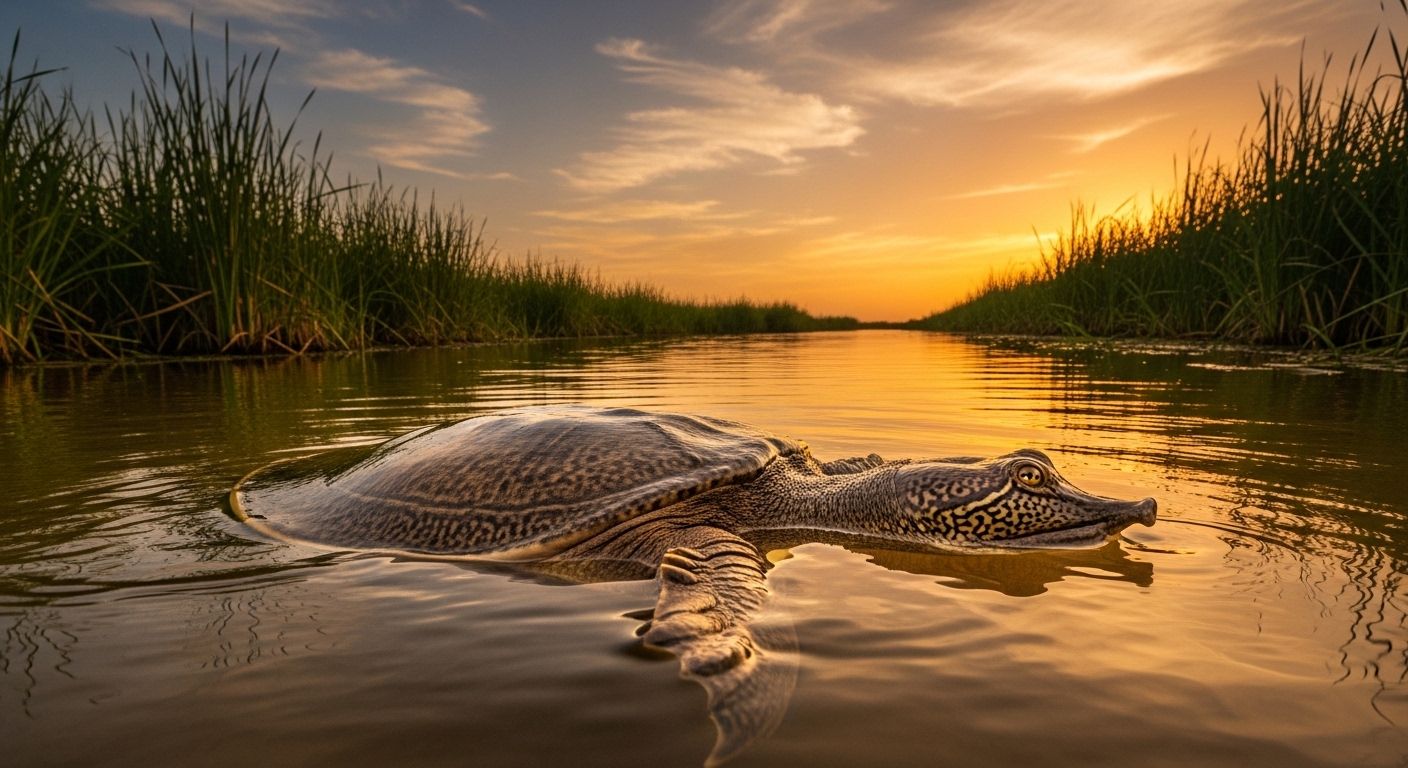
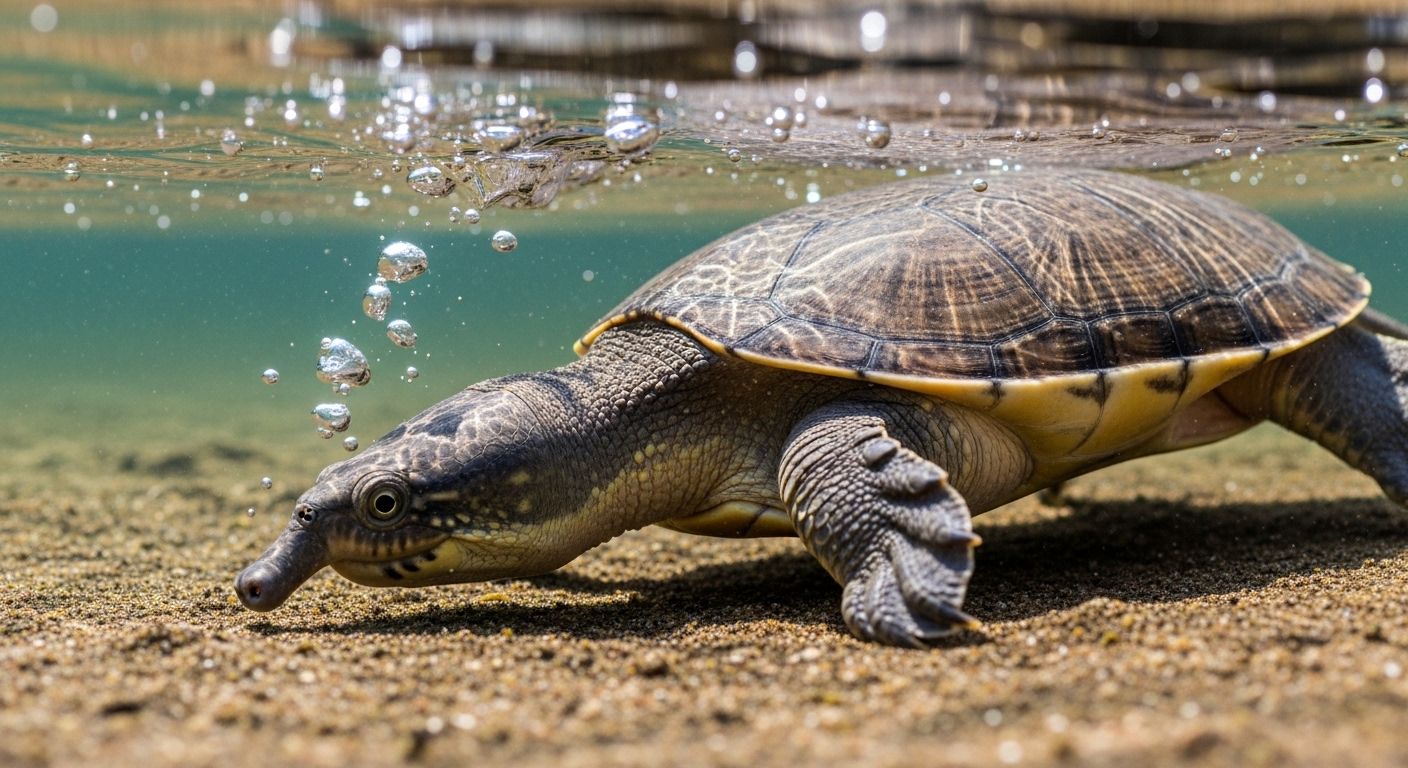
The answer’s simpler than your cousin’s excuse for missin’ Thanksgiving: softshell turtles. Specifically, members of the family Trionychidae—like the Florida softshell, smooth softshell, and spiny softshell—are the only North American turtles sporting that iconic elongated, fleshy snout. Unlike your average box turtle or slider, these critters evolved this tubular nose to breathe while buried in riverbeds, acting like a natural snorkel. So when you see a turtle with snout barely breakin’ the surface, it’s not daydreamin’—it’s huntin’, hidin’, and survivin’ all at once.
What Kind of Turtle Has a Pointy Nose? Anatomy of an Aquatic Oddity
Form follows function in muddy waters
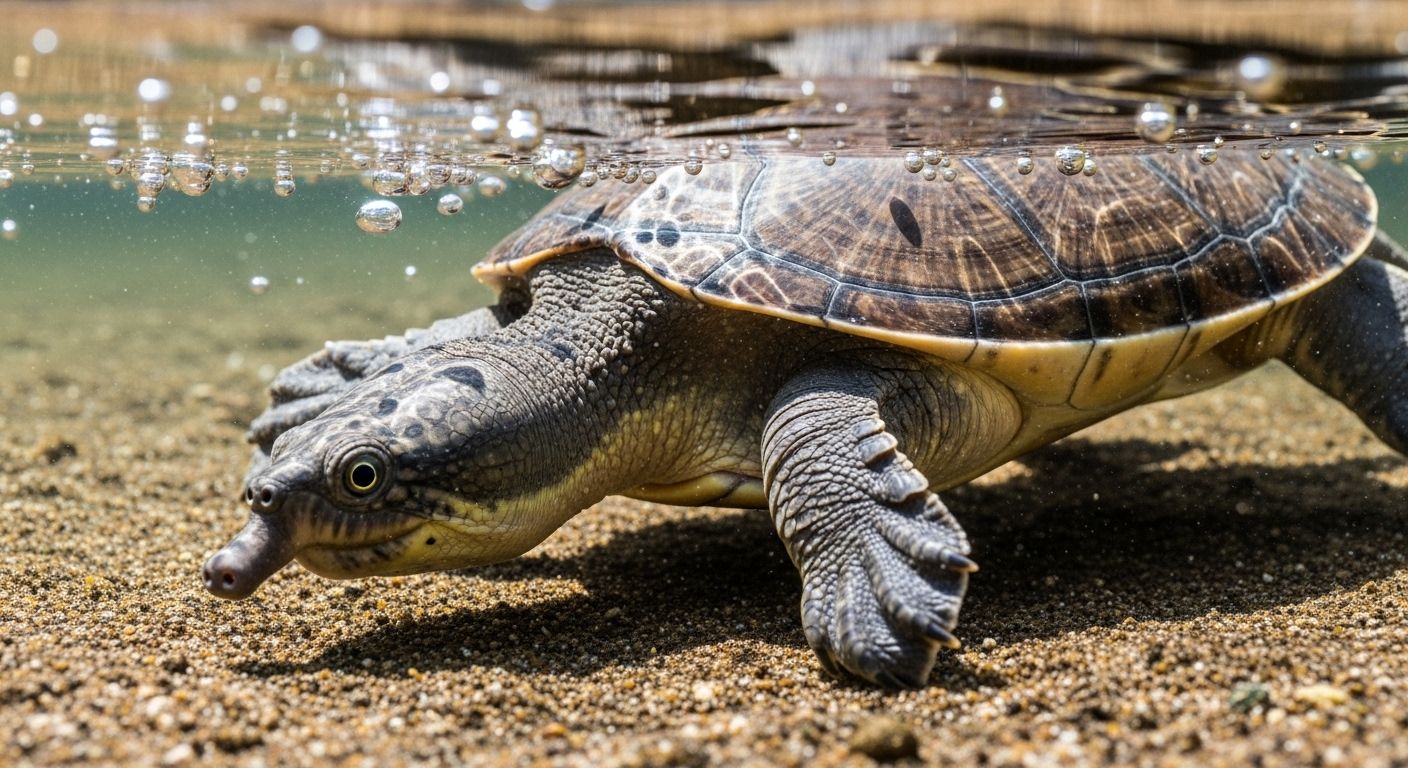
That “pointy nose” ain’t for show—it’s pure evolutionary genius. The snout of a softshell turtle is long, flexible, and tipped with nostrils that can close underwater. This lets the turtle with snout stay submerged for hours, buried in sand or silt, waiting to ambush prey like crayfish or small fish. Think of it as nature’s version of a submarine periscope—but way slimier and way cooler. And yep, it’s why they look like they’re perpetually sniffin’ somethin’ suspicious… probably your lunch.
What Is a Softshell Turtle? Beyond the Weird Snout
Leather, speed, and river swagger
A softshell turtle ain’t your grandma’s pond pet. It’s got a flat, rubbery shell (no hard scutes!), webbed feet built for jet-propelled swimming, and eyes that scream “I’ve seen things.” Belonging to the genus *Apalone* (in North America), these turtles ditch armor for agility—sacrificing bony protection for speed and stealth. They’re ambush predators, lightning-fast on land (for a turtle), and can grow up to 24 inches in the case of the Florida softshell. So when you ask “what is a softshell turtle?”—think less “cute sidekick,” more “river ghost with a snout.”
Habitat and Range of the Turtle with Snout Across the U.S.
From bayous to backwaters
You’ll find a turtle with snout wherever there’s slow-moving, sandy-bottomed freshwater—from the swamps of Louisiana to the rivers of Illinois, and down through the Everglades. The Florida softshell (*Apalone ferox*) dominates the Southeast, while the smooth softshell (*A. mutica*) prefers clearer streams farther north. They avoid rocky or fast-flowing water; instead, they crave mud, muck, and quiet pools where they can vanish like swamp ninjas. Pro tip: if the water looks too clean, you probably won’t find ‘em. These guys like their rivers a little… lived-in.
Can Florida Softshell Turtles Bite? Handling Myths vs. Reality
Respect the snout, respect the snap
Alright, let’s cut through the tall grass: yes, a Florida softshell turtle *can* bite—and it’ll hurt like heck. With powerful jaws, sharp beaks, and necks that stretch halfway across the room, they’re not shy about defendin’ themselves. Unlike docile sliders, softshells are high-strung and quick to strike if handled. That said, they won’t chase you down the dock yellin’ “Geronimo!”—they’d much rather bury and bolt. So while the turtle with snout isn’t malicious, it’s definitely not a petting zoo candidate. Treat it like a wild thing—because it is.
Diet and Hunting Strategy: Snout as a Weapon
Vacuum cleaners of the riverbed
That snout ain’t just for breathin’—it’s part of a deadly feeding system. A turtle with snout uses its elongated nose to detect vibrations and chemical cues in the water, zeroing in on worms, insects, fish, frogs, and even ducklings. When prey swims near, it lunges with terrifying speed, sucking food into its mouth like a biological Shop-Vac. Some researchers reckon they can even sense electrical fields from muscle movements—making them apex ambushers in murky depths. Bottom line? Don’t underestimate the snout. It’s got layers.
Reproduction and Nesting Behavior of Snouted Turtles
Eggs in the sand, secrets in the current
Every spring, female softshells haul their leathery selves onto sandy banks—often under moonlight—to dig nests with their hind legs. A single clutch can hold 15 to 30+ eggs, depending on species and size. The Florida softshell, being the heavyweight champ, lays some of the largest clutches in North America. Incubation lasts 60–90 days, and hatchlings emerge lookin’ like tiny, pointy-nosed ghosts ready to vanish into the shallows. Sadly, raccoons, foxes, and feral hogs devour most nests before they hatch. So every turtle with snout you see survived a gauntlet just to say hello.
Common Misconceptions About the Turtle with Snout
Debunking swamp lore
Myth #1: “It’s a mutant snapping turtle.” Nope—different family entirely. Myth #2: “They’re aggressive by nature.” Truth? They’re just nervous. Myth #3: “All snouted turtles are the same.” Actually, the Florida softshell has a broader, flatter carapace than the sleek smooth softshell, and the spiny softshell sports tiny projections on its shell edge. Confusing ‘em is like callin’ a bass boat a canoe—same water, different beast. The turtle with snout deserves better than lazy labels.
Conservation Status: Are Snouted Turtles in Trouble?
Slipping through the cracks
While none of North America’s softshell turtles are federally endangered, local populations are feelin’ the squeeze. Wetland drainage, river damming, pollution, and roadkill have hit them hard—especially in urbanizing states like Georgia and Texas. The Florida softshell remains relatively abundant, but even it’s declining in fragmented habitats. And because they’re rarely monitored like sea turtles, their struggles fly under the radar. Protecting the turtle with snout means protecting free-flowing rivers, clean sandbars, and the quiet spaces between the noise.
Why the Turtle with Snout Captures Our Imagination
Oddity as ecological poetry
There’s somethin’ deeply poetic about a turtle with snout—a creature so strange it feels like a myth made flesh. It doesn’t fit our tidy ideas of what a turtle “should” look like, and that’s exactly why we love it. It’s a reminder that evolution ain’t about perfection—it’s about adaptation, weirdness, and survival against the odds. In a world obsessed with symmetry, the snouted turtle stands (or floats) as a glorious outlier. And maybe that’s the lesson: sometimes, the most important beings are the ones who don’t quite belong… until you realize they’re exactly where they need to be.
Want to explore more reptilian wonders? Start at the Sea Turtle Farm homepage. Browse all profiles in our Species section. Or check out another striking face of the turtle world in our feature on the Turtle With Yellow Stripes On Head: Racer Mark.
Frequently Asked Questions
What kind of turtle has a snout?
Softshell turtles—particularly species in the genus Apalone like the Florida, smooth, and spiny softshells—are the primary North American turtles known for their elongated, snorkel-like turtle with snout anatomy, adapted for breathing while buried in river sediment.
What kind of turtle has a pointy nose?
The “pointy nose” belongs to softshell turtles, whose distinctive snout functions as a respiratory tube. This feature is most pronounced in the turtle with snout varieties found across southeastern and central U.S. river systems.
What is a softshell turtle?
A softshell turtle is a highly aquatic, fast-swimming reptile with a leathery, flexible shell and an elongated snout. Native to North America, it includes species like the Florida softshell and is defined by its unique adaptations for life in muddy freshwater—hallmarks of the turtle with snout identity.
Can Florida softshell turtles bite?
Yes, Florida softshell turtles can deliver a painful bite due to their strong jaws and long necks. While not aggressive unless threatened, they are defensive and quick to strike—making the turtle with snout a wild animal best observed, not handled.
References
- https://www.fws.gov/species/florida-softshell-turtle-apalone-ferox
- https://www.iucnredlist.org/species/9237/129443178
- https://herpsofnc.org/florida-softshell-turtle/
- https://www.nature.org/en-us/get-involved/how-to-help/places-we-protect/freshwater-turtle-conservation/