Common Musk Turtle Habitat Stinkpot Pro
- 1.
What Do Musk Turtles Need in Their Tank?
- 2.
What Is the Best Habitat for a Musk Turtle?
- 3.
What Is the Natural Habitat of the Musk Turtle?
- 4.
How Big of an Enclosure Does a Musk Turtle Need?
- 5.
Building the Perfect Indoor Common Musk Turtle Habitat
- 6.
Lighting & Temperature: Subtle but Essential
- 7.
Water Quality: Clean, Cool, and Calm
- 8.
Diet: Carnivores with a Taste for the Wild
- 9.
Common Mistakes That Stress Out Musk Turtles
- 10.
Leveling Up Your Musk Turtle Habitat Game
Table of Contents
common musk turtle habitat
What Do Musk Turtles Need in Their Tank?
Ever seen a stinkpot turtle vanish into the muck like it’s got a secret mission? That’s the common musk turtle for ya—tiny, stealthy, and full of swampy swagger. But don’t let their size fool you: these little fellers need a thoughtfully built common musk turtle habitat to thrive. First off, they’re bottom-dwellers, so deep water ain’t necessary—6 to 10 inches is plenty [[8]]. They need a soft substrate (fine sand or smooth river stones), hiding spots galore (clay pots, driftwood tunnels), and a gentle filter that won’t blast ‘em around like a leaf in a hurricane. Oh, and despite rumors, they *do* need a basking area—even if they rarely use it. UVB lighting and a warm dock (85°F) are non-negotiable for shell health [[14]]. Skip the fancy decor; these guys prefer “mysterious creek bed” over “aquarium showroom.”
What Is the Best Habitat for a Musk Turtle?
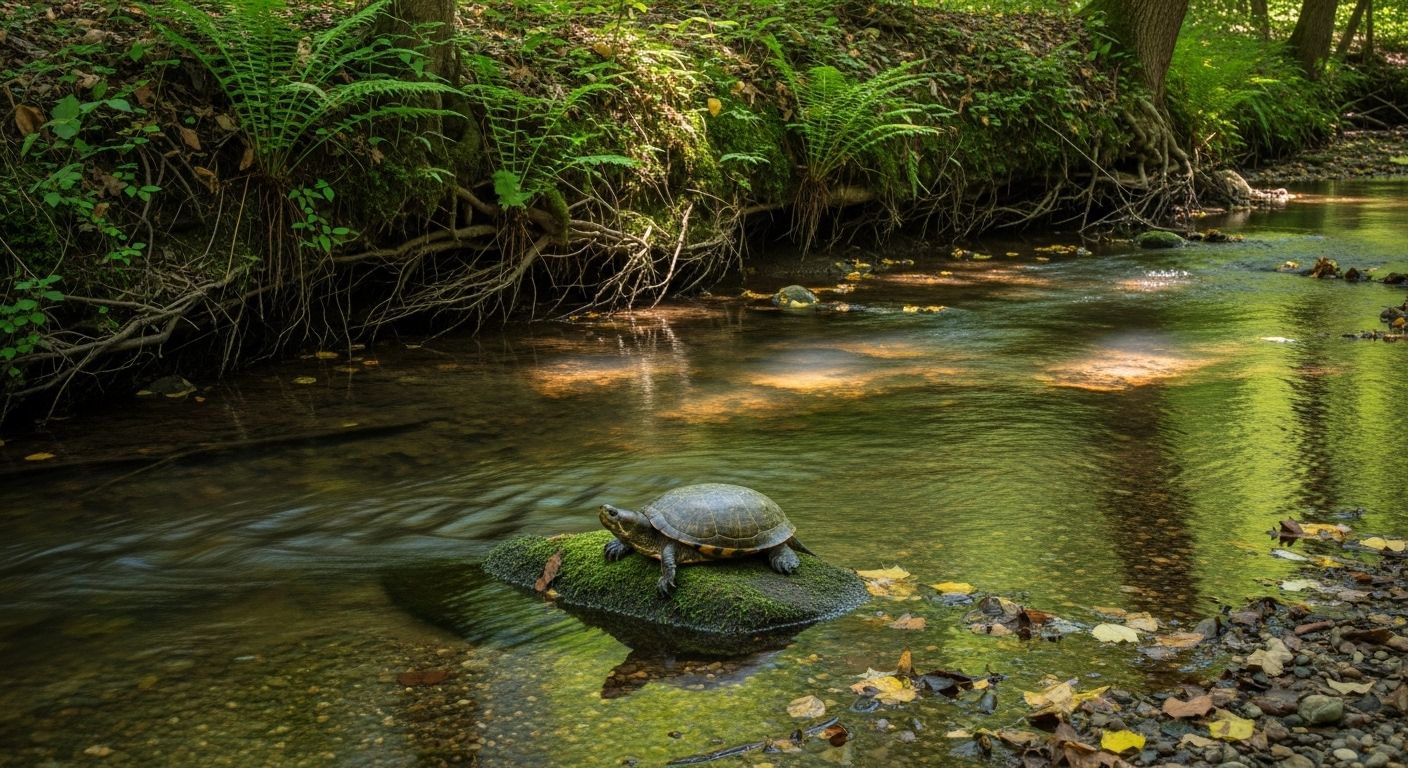
The best common musk turtle habitat mimics their natural haunts: slow-moving creeks, cypress swamps, and muddy ponds from southern Ontario down to Florida [[6]]. Indoors, that means cool water (72–78°F), low light, minimal current, and tons of cover. Think leaf litter, submerged logs, and dense aquatic plants like java moss or anubias. These turtles are shy—they’ll bolt at sudden movements—so place the tank in a quiet corner, not next to the TV or laundry room. And please, for the love of all that’s scaly, skip the gravel. It’s a choking hazard and looks nothing like the soft silt they’d dig through in the wild.
What Is the Natural Habitat of the Musk Turtle?
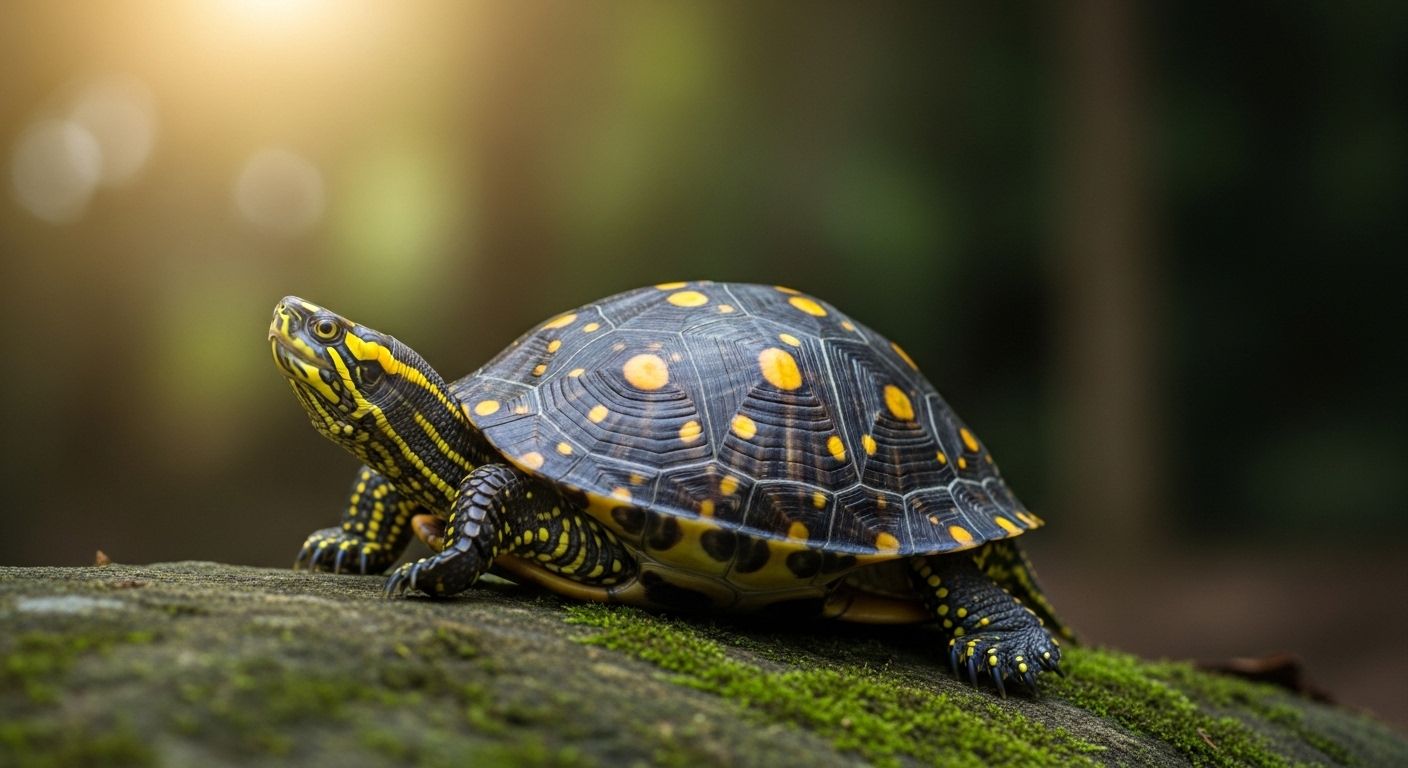
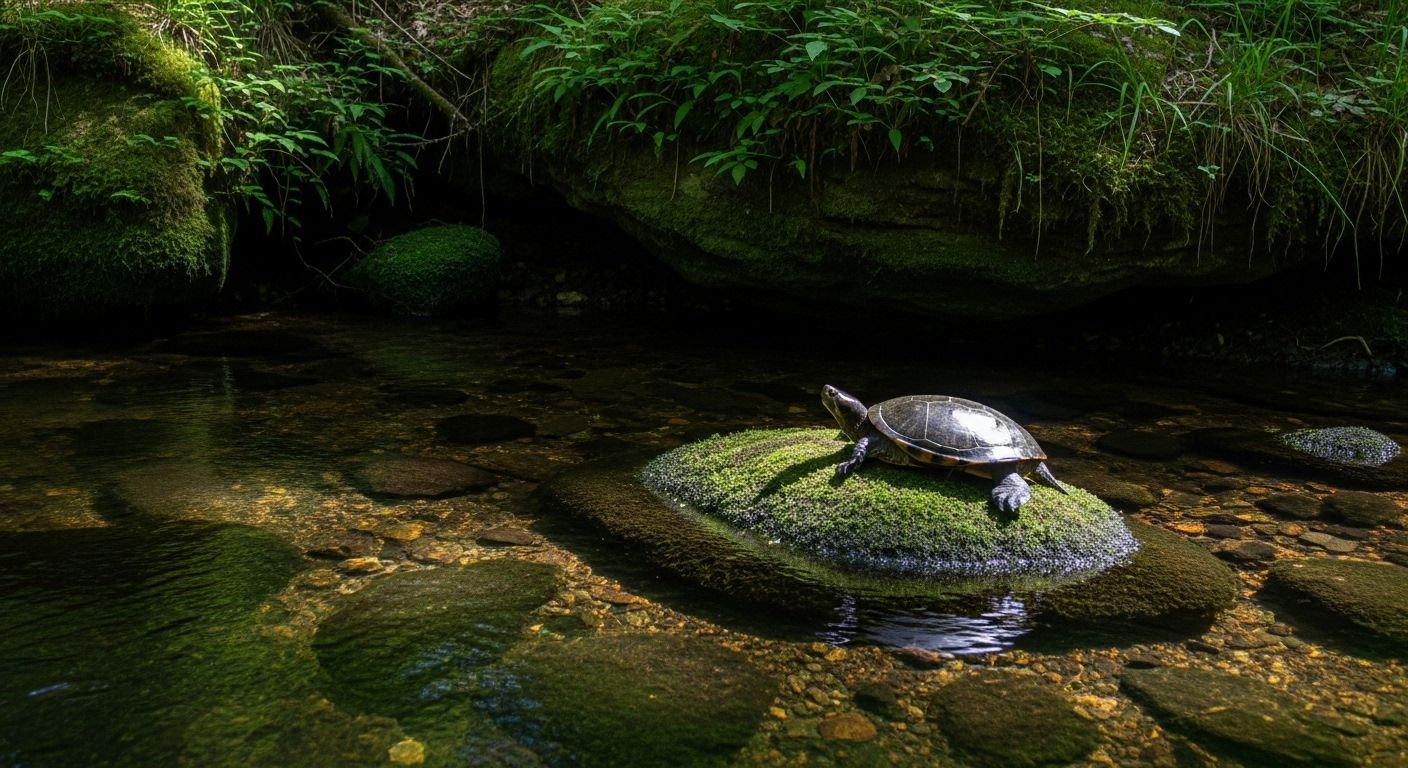
In the wild, common musk turtles (*Sternotherus odoratus*) haunt shallow, vegetated freshwater systems with soft bottoms and abundant cover [[9]]. They’re found from Quebec to Texas, but they favor the Southeast—where blackwater streams stain the water tea-colored and cypress knees poke through the surface like ancient sentinels. They rarely bask in the open; instead, they’ll rest under overhanging roots or half-buried in mud. That’s why your common musk turtle habitat should feel hidden, dim, and rich with texture. No bright LEDs. No bare glass. Just quiet, murky comfort—the kind that says, “I’ve got secrets, and I’m keepin’ ‘em.”
How Big of an Enclosure Does a Musk Turtle Need?
Don’t be fooled by their 3–5 inch shells—musk turtles still need space. A single adult needs a minimum of a 40-gallon breeder tank (36” x 18” x 15”) [[12]]. Why breeder? Horizontal space > depth. They’re not vertical swimmers; they cruise the bottom like tiny armored submarines. For two turtles? Go 75 gallons or risk territorial squabbles. And never house them with fish or aggressive turtles—they’ll either get bullied or turn your guppies into midnight snacks. Your common musk turtle habitat should feel expansive enough for exploration but cozy enough for hiding. Balance is key.
Building the Perfect Indoor Common Musk Turtle Habitat
Alright, y’all—let’s build this swamp right. Start with a 40-gallon breeder tank. Fill it with 6–8 inches of dechlorinated water, heated to 74–76°F (they prefer cooler than sliders) [[11]]. Use fine sand as substrate—it’s safe for digging and feels natural under their plastron. Add hiding spots: overturned clay pots with entry holes, PVC pipes wrapped in moss, or driftwood caves. Install a sponge filter or low-flow canister (rated for 2x tank volume) to keep water clean without strong currents. Place a small floating dock under a 50W basking lamp and a linear T5 HO UVB 5.0 tube. Keep lighting dim—use a timer for 10–12 hours/day. Your common musk turtle habitat should whisper “backwater sanctuary,” not “pet store display.”
Lighting & Temperature: Subtle but Essential
Musk turtles aren’t sun worshippers—but they still need UVB. A low-output UVB 5.0 tube over the basking zone prevents metabolic bone disease [[14]]. Keep basking temps at 85–88°F, water at 72–76°F, and nighttime temps above 65°F. No heat rocks—they burn. And skip colored bulbs; white daylight spectrum only. Your common musk turtle habitat lighting should be present but unobtrusive, like moonlight on a still pond. They’ll use the basking spot sparingly, but it must be there—for health, not habit.
Water Quality: Clean, Cool, and Calm
These turtles hate turbulence. So while filtration is crucial, go gentle: sponge filters or canisters with flow diffusers are ideal. Perform 25% water changes weekly, and test for ammonia (0 ppm), nitrites (0 ppm), nitrates (<40 ppm) [[19]]. Cloudy water usually means overfeeding—cut back. And always dechlorinate tap water; chlorine irritates their sensitive skin and eyes. In your common musk turtle habitat, water quality isn’t just about cleanliness—it’s about reducing stress. And less stress = longer life.
Diet: Carnivores with a Taste for the Wild
Common musk turtles are almost entirely carnivorous. Think earthworms, bloodworms, blackworms, crickets, and high-quality sinking pellets [[20]]. Juveniles eat daily; adults 3–4x/week. They hunt by scent, so feed in-water and remove uneaten food within 10 minutes. Dust food with calcium powder 2x/week. Avoid veggies—they rarely eat ‘em. A proper diet keeps your common musk turtle habitat cleaner and your turtle healthier, with strong jaws and sharp instincts.
Common Mistakes That Stress Out Musk Turtles
We’ve seen folks cram ‘em into nano tanks, blast ‘em with 100W basking lamps, or handle ‘em like pocket pets. Bad ideas. Musk turtles are escape artists—so secure that lid! They also hate bright lights, loud noises, and strong currents. Never mix them with fast fish or aggressive turtles—they’ll hide constantly or get injured. And don’t expect them to “bond” with you; they’re wild at heart. Your common musk turtle habitat should honor their nature, not force them into ours.
Leveling Up Your Musk Turtle Habitat Game
Ready to go pro? Try a bioactive setup: live plants, leaf litter, and cleanup crews like snails or isopods. Add a drip system for gentle oxygenation. Use natural wood and stone instead of plastic decor. And connect with the community: swing by Sea Turtle Farm for seasonal care tips, browse the Habitat section for species-specific builds, or steal ideas from Stinkpot Turtle Habitat Tiny Tank Win. Small upgrades mean big comfort for these quiet, mysterious souls—and trust us, they notice.
Frequently Asked Questions
What do musk turtles need in their tank?
Musk turtles need a common musk turtle habitat with 6–10 inches of cool water (72–76°F), soft substrate like sand, multiple hiding spots, low-flow filtration, a small dry basking area with UVB lighting, and a quiet, dim environment. Despite their secretive nature, UVB and basking access are essential for long-term health.
What is the best habitat for a musk turtle?
The best common musk turtle habitat replicates their natural swampy creeks: shallow, vegetated water with soft bottoms, abundant cover, cool temperatures, and minimal disturbance. Indoors, this means a 40+ gallon breeder tank with hiding caves, gentle filtration, and subdued lighting.
What is the natural habitat of the musk turtle?
The natural habitat of the common musk turtle includes slow-moving freshwater systems like blackwater streams, cypress swamps, and muddy ponds across eastern North America. Their ideal common musk turtle habitat features soft substrates, dense vegetation, and plenty of submerged cover for hiding.
How big of an enclosure does a musk turtle need?
A single adult musk turtle needs a minimum 40-gallon breeder tank (36"x18"x15"). The common musk turtle habitat should prioritize horizontal swimming space over depth, as these turtles are bottom-dwellers who rarely venture to the surface except to breathe.
References
- https://www.thesprucepets.com/musk-turtle-care-sheet-1238523
- https://www.reptilesmagazine.com/care-sheets/turtles-tortoises/common-musk-turtle-care-sheet/
- https://wildlife.ca.gov/Conservation/Invasives/Species/Sternotherus-odoratus
- https://www.tortoisetrust.org/articles/muskturt.htm
- https://www.animaldiversity.org/accounts/Sternotherus_odoratus/
- https://www.petmd.com/reptile/care/evr_rept_musk_turtle_care_sheet
- https://www.vetmed.ucdavis.edu/giving/news/keeping-pet-turtles-healthy
- https://www.aquaticcommunity.com/musk-turtle.php
- https://www.turtlehobbyist.com/musk-turtle-care-guide/
- https://www.fws.gov/species/common-musk-turtle-sternotherus-odoratus