Snapping Turtle Cage Monster Size Need
- 1.
What’s the Deal with a Snapping Turtle Cage Anyway?
- 2.
Legality Check: Can You Even Keep a Snapping Turtle?
- 3.
Snapping Turtles as Pets: Cool Idea or Catastrophic Mistake?
- 4.
Size Matters—A Lot—in a Snapping Turtle Cage
- 5.
Indoor vs. Outdoor Setups: Where Does Your Snapper Thrive?
- 6.
Filtration & Water Quality: Because Snappers Are Messy AF
- 7.
Basking Areas? Not Really… But Lighting Still Counts
- 8.
Substrate & Decor: Keep It Simple, Stupid
- 9.
Feeding & Enrichment: Keeping Your Snapper Satisfied
- 10.
Common Pitfalls (And How to Dodge ‘Em Like a Pro)
Table of Contents
snapping turtle cage
What’s the Deal with a Snapping Turtle Cage Anyway?
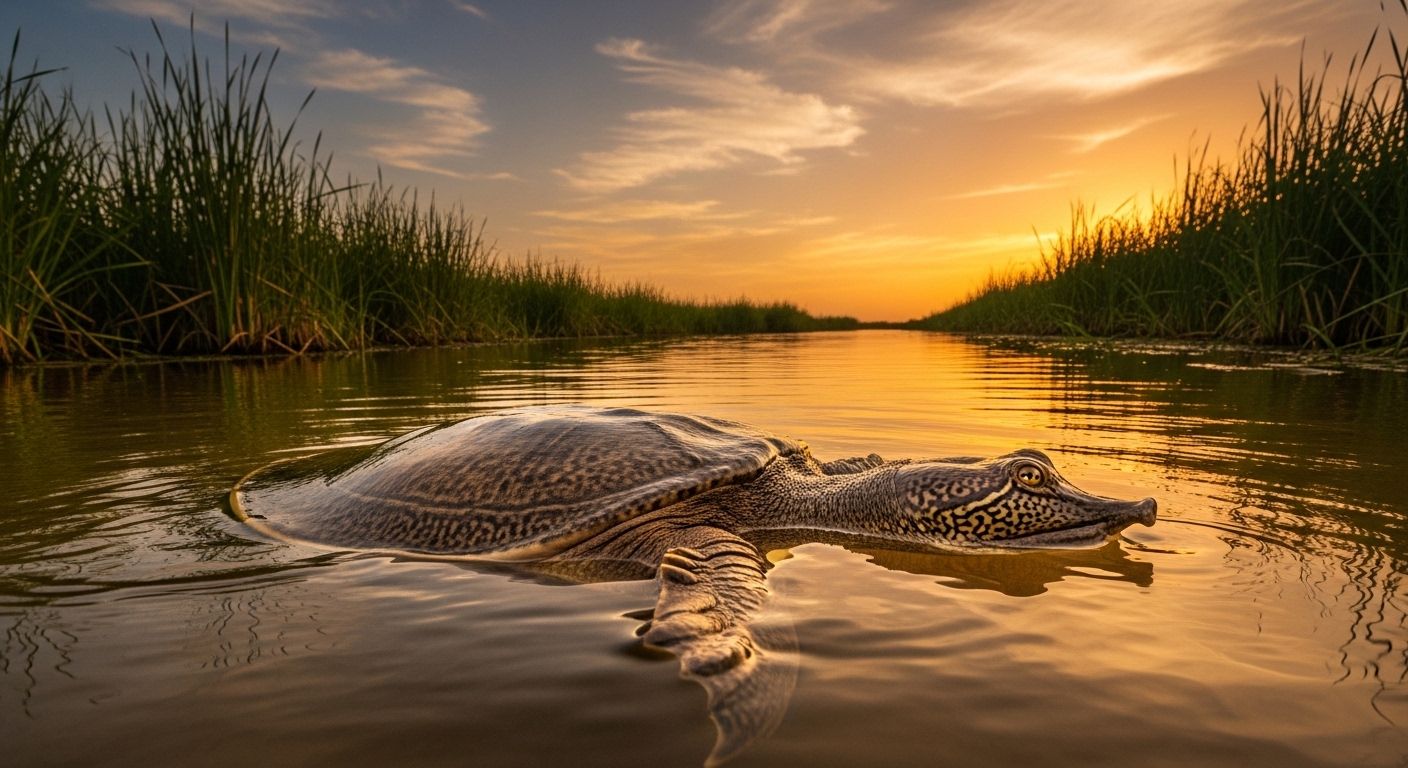
Ever tried to pet a snapping turtle and walked away with a new appreciation for personal space? Yeah, us too. These bad boys—whether it’s the common (*Chelydra serpentina*) or the alligator snapping turtle (*Macrochelys temminckii*)—ain’t your average “sit-on-your-shoulder” reptile. So when folks ask, “What is the best enclosure for a snapping turtle?” we gotta be real: it ain’t just a cage—it’s a fortress with benefits. A proper snapping turtle cage needs to balance security, space, water depth, and escape-proof engineering. Think of it like building a tiny moat-surrounded castle… for a grumpy, prehistoric ninja with jaws that could crack a coconut.
Legality Check: Can You Even Keep a Snapping Turtle?
Before you go haulin’ home a wild snapper from your local pond (don’t), you better check if it’s legal where you live. In some states—like California, Oregon, or Hawaii—it’s straight-up illegal to own a snapping turtle without special permits [[1]]. Others require licenses, especially for alligator snappers, which are federally protected in parts of their range. Even if it’s legal, ask yourself: do you really wanna deal with a 100-pound tank monster that hisses like a swamp demon? A legit snapping turtle cage setup isn’t just about ethics—it’s about obeying the law, too. When in doubt, call your state wildlife agency. Better safe than sorry (and fined).
Snapping Turtles as Pets: Cool Idea or Catastrophic Mistake?
Can snapping turtles be kept as pets? Technically, yes—but they’re not “pets” in the cuddly sense. They’re more like living museum exhibits with attitude. Unlike red-eared sliders or painted turtles, snappers don’t get tame. Ever. They’ll tolerate you, maybe recognize your feeding hand, but don’t expect them to come when called. That said, if you’ve got the space, patience, and respect for their power, a well-designed snapping turtle cage can house one for decades (they live 30–70 years!). Just remember: this ain’t a starter pet. It’s a lifelong commitment to a creature that bites first and asks questions never.
Size Matters—A Lot—in a Snapping Turtle Cage
So, what size tank does a snapping turtle need? Let’s break it down. A baby might fit in a 20-gallon, but that’s temporary—like wearing toddler shoes at age 12. Adult common snappers (10–35 lbs) need **at least** 120 gallons. Alligator snappers (50–150+ lbs)? Think outdoor ponds or custom-built indoor pools. Rule of thumb: water depth should be 1.5x the turtle’s shell length, and floor space should allow full turns without bumping walls. A cramped snapping turtle cage = stressed turtle = aggressive behavior + health issues. Don’t cheap out. Your wallet might cry now, but your conscience (and fingers) will thank you later.
Indoor vs. Outdoor Setups: Where Does Your Snapper Thrive?
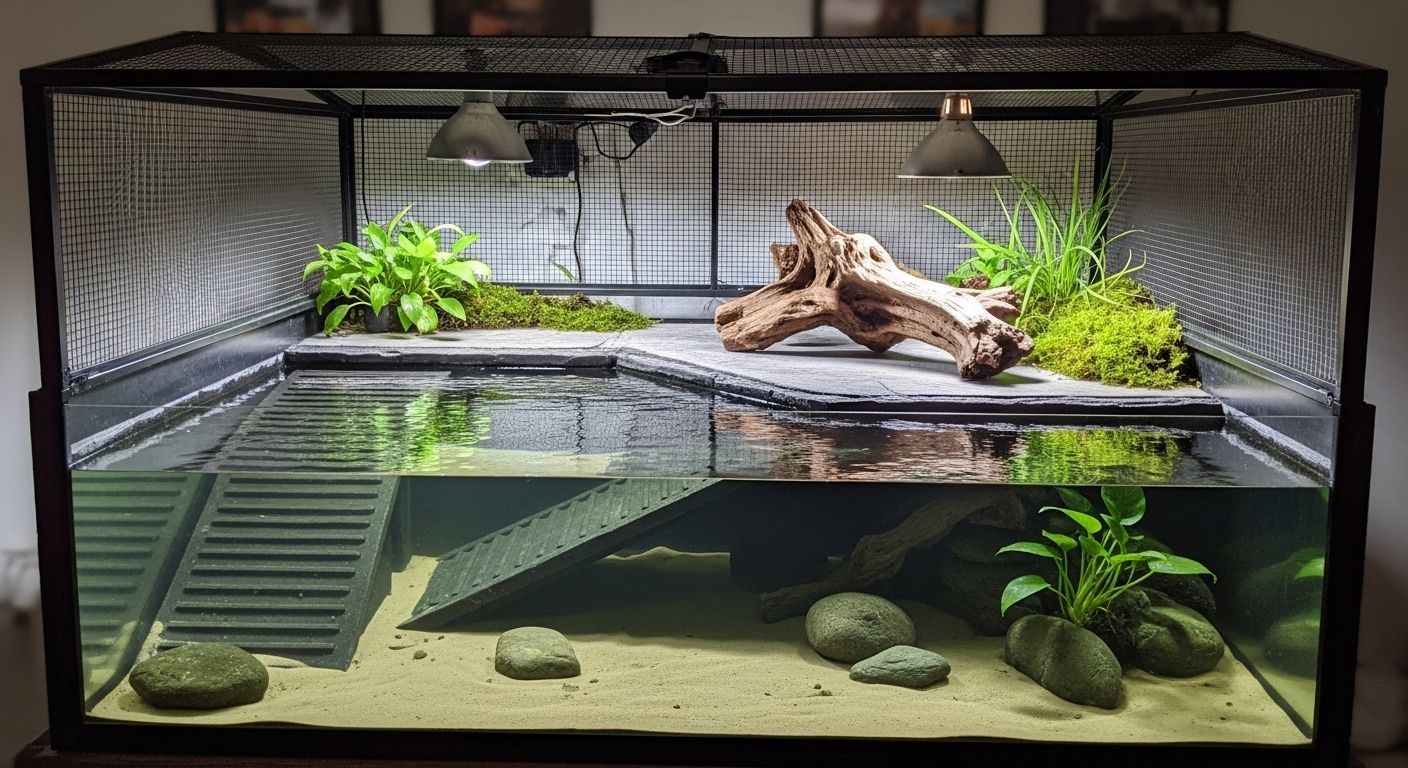
If you live somewhere warm year-round (think Florida, Texas, or Southern California), an outdoor pond is the gold standard for a snapping turtle cage. Natural sunlight, seasonal cues, room to roam—it’s basically turtle paradise. But if winters dip below 50°F, you’ll need a heated indoor alternative. Indoors means heavy-duty filtration (snappers are filthy eaters), secure lids (they climb better than you’d think), and zero sharp edges. Oh, and forget glass tanks—they’ll ram ‘em like bulls. Use stock tanks, Rubbermaid troughs, or custom fiberglass builds. Safety first, aesthetics second.
Filtration & Water Quality: Because Snappers Are Messy AF
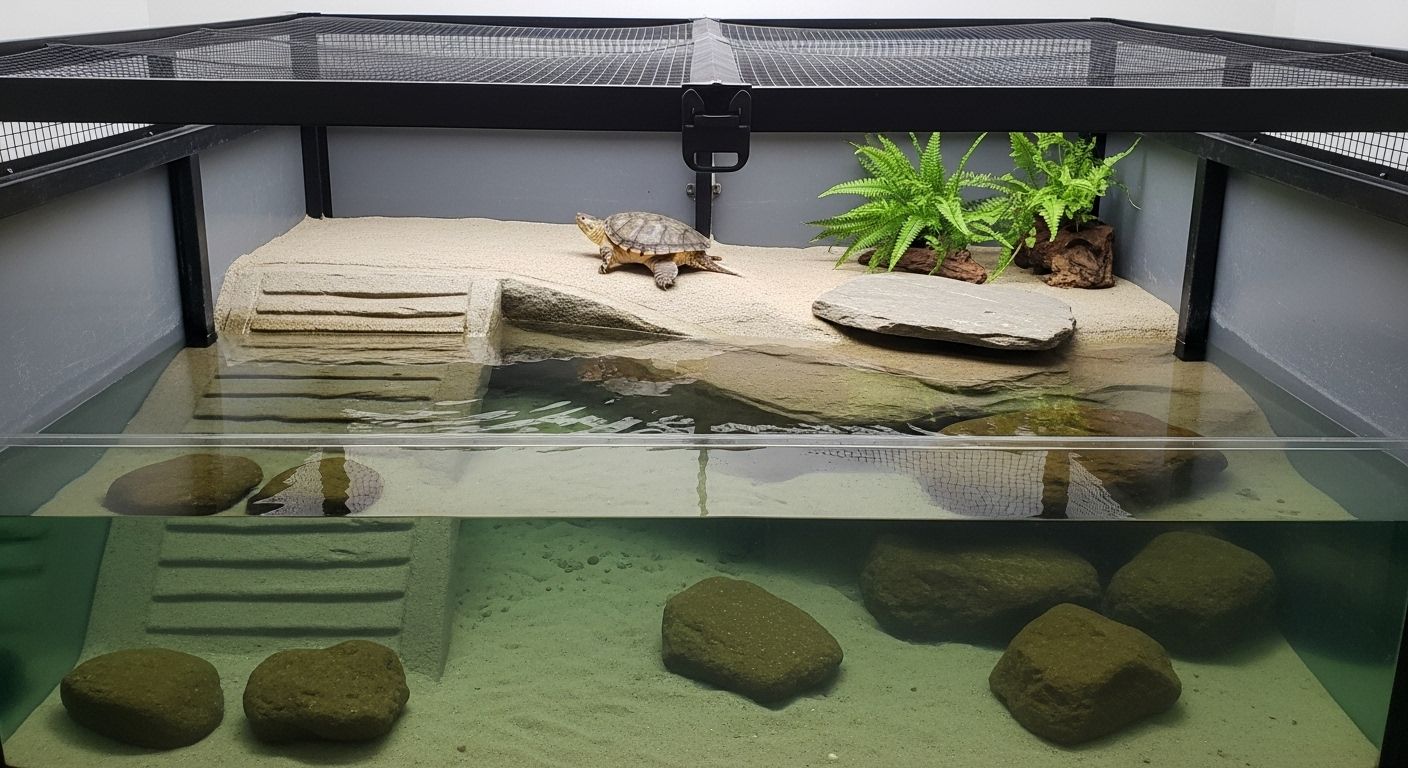
Let’s be blunt: snapping turtles turn clean water into swamp broth in under an hour. Their diet (fish, worms, pellets) leaves chunks everywhere, and they stir up sediment like tiny bulldozers. So your snapping turtle cage needs a filter rated for *at least* 3x the tank volume. A canister filter (like Fluval FX6) or sump system is ideal. Weekly 50% water changes? Non-negotiable. And test ammonia/nitrite weekly—these guys are sensitive to poor water, even if they look tough. Pro tip: feed in a separate tub to reduce mess. Your filter—and your nose—will thank you.
Basking Areas? Not Really… But Lighting Still Counts
Unlike most turtles, snapping turtles rarely bask out of water. They’re ambush predators who prefer to stay submerged. So no, you don’t need a dry basking platform. BUT—they still need UVB lighting! Why? Because even underwater, they absorb UV through the water surface. Mount a high-output UVB tube (like Arcadia 12%) over the tank, and keep it on 10–12 hours/day. Pair it with a submersible heater (75–80°F) and you’ve got a solid thermal/UV setup for your snapping turtle cage. Skip the UVB, and you risk metabolic bone disease—a slow, painful decline.
Substrate & Decor: Keep It Simple, Stupid
When designing a snapping turtle cage, less is more. Bare-bottom tanks are easiest to clean. If you insist on substrate, use large river stones (too big to swallow) or smooth sand—but know it’ll trap waste. Avoid gravel, wood chips, or anything small. As for decor: skip the plastic castles. Snappers don’t need toys. A few flat rocks for hiding, maybe a PVC pipe tunnel, and that’s it. Over-decorating = injury risk + cleaning nightmare. Remember: this ain’t a fish tank—it’s a functional habitat for a no-nonsense reptile.
Feeding & Enrichment: Keeping Your Snapper Satisfied
Feeding time in a snapping turtle cage is equal parts fascinating and terrifying. Offer variety: earthworms, feeder fish (gut-loaded!), shrimp, commercial turtle pellets, and occasional greens. Juveniles eat daily; adults 2–3x/week. Never feed raw chicken or beef—it causes fatty liver disease. And enrichment? Let them hunt! Drop live crickets or minnows into the water. It stimulates natural behavior and burns energy. Just don’t stick your hand in during feeding—use tongs. Seriously. Those jaws close at 209 psi [[5]]. That’s stronger than a dog bite.
Common Pitfalls (And How to Dodge ‘Em Like a Pro)
New owners often underestimate the power, size, and longevity of snapping turtles. They buy a tiny tank, skip the filter, or try to handle them like tortoises—big mistake. Another error? Assuming they’re “low maintenance.” Nope. A proper snapping turtle cage demands weekly upkeep, space planning, and deep respect. If you’re unsure, start by reading guides from experts, or visit Sea Turtle Farm for honest advice. Browse our Habitat section, or compare setups in our detailed piece on common musk turtle habitat stinkpot pro. Knowledge beats guesswork every time.
Frequently Asked Questions
What is the best enclosure for a snapping turtle?
The best snapping turtle cage is a spacious, escape-proof setup—either a large indoor tank (120+ gallons for adults) or an outdoor pond in warm climates. It must include strong filtration, appropriate water depth (1.5x shell length), UVB lighting, and smooth, safe materials. Avoid glass tanks and small enclosures to ensure long-term health and safety.
Can you legally keep a snapping turtle?
It depends on your location. Some U.S. states ban snapping turtle ownership entirely, while others require permits—especially for alligator snapping turtles, which are protected in many areas. Always check local wildlife regulations before setting up a snapping turtle cage to avoid legal trouble.
Can snapping turtles be kept as pets?
Yes, but with major caveats. Snapping turtles aren’t affectionate pets; they’re wild animals that require specialized care. A proper snapping turtle cage, decades-long commitment, and hands-off handling are essential. They’re best suited for experienced reptile keepers who understand their needs and risks.
What size tank does a snapping turtle need?
Baby snapping turtles need at least 20–40 gallons, but adults require 120+ gallons—or even custom ponds for alligator snappers. The snapping turtle cage should provide ample swimming space, with water depth at least 1.5 times the turtle’s shell length, and enough floor area for full-body turns.
References
- https://www.tpwd.texas.gov/huntwild/wild/species/turtles/snapping/
- https://www.fws.gov/species/alligator-snapping-turtle-macrochelys-temminckii
- https://reptilesmagazine.com/snapping-turtle-care-sheet/
- https://www.thesprucepets.com/snapping-turtle-care-1238349
- https://www.nationalgeographic.com/animals/reptiles/facts/common-snapping-turtle
- https://www.anapsid.org/snapping.html
- https://www.petmd.com/reptile/care/snapping-turtle-care-sheet
- https://www.seaturtles.org/article.php?id=1123