Yellow Bellied Slider Turtle Habitat Pro Guide
- 1.
What Do Yellow Belly Turtles Need in Their Tank?
- 2.
Do Yellow Belly Sliders Need Land? You Bet They Do.
- 3.
Can Yellow Belly Turtles Go Outside? Only If You’re Careful
- 4.
How Cold Can Yellow Belly Sliders Tolerate? Not Very.
- 5.
Building the Perfect Indoor Tank Setup
- 6.
Lighting & Heating: The Invisible Lifelines
- 7.
Water Quality: Because Nobody Likes Swamp Soup
- 8.
Diet & Feeding Zones: Keep It Clean, Keep It Balanced
- 9.
Common Mistakes That Turn Habitats Into Hazards
- 10.
Upgrading Your Habitat: From Basic to Brilliant
Table of Contents
yellow bellied slider turtle habitat
What Do Yellow Belly Turtles Need in Their Tank?
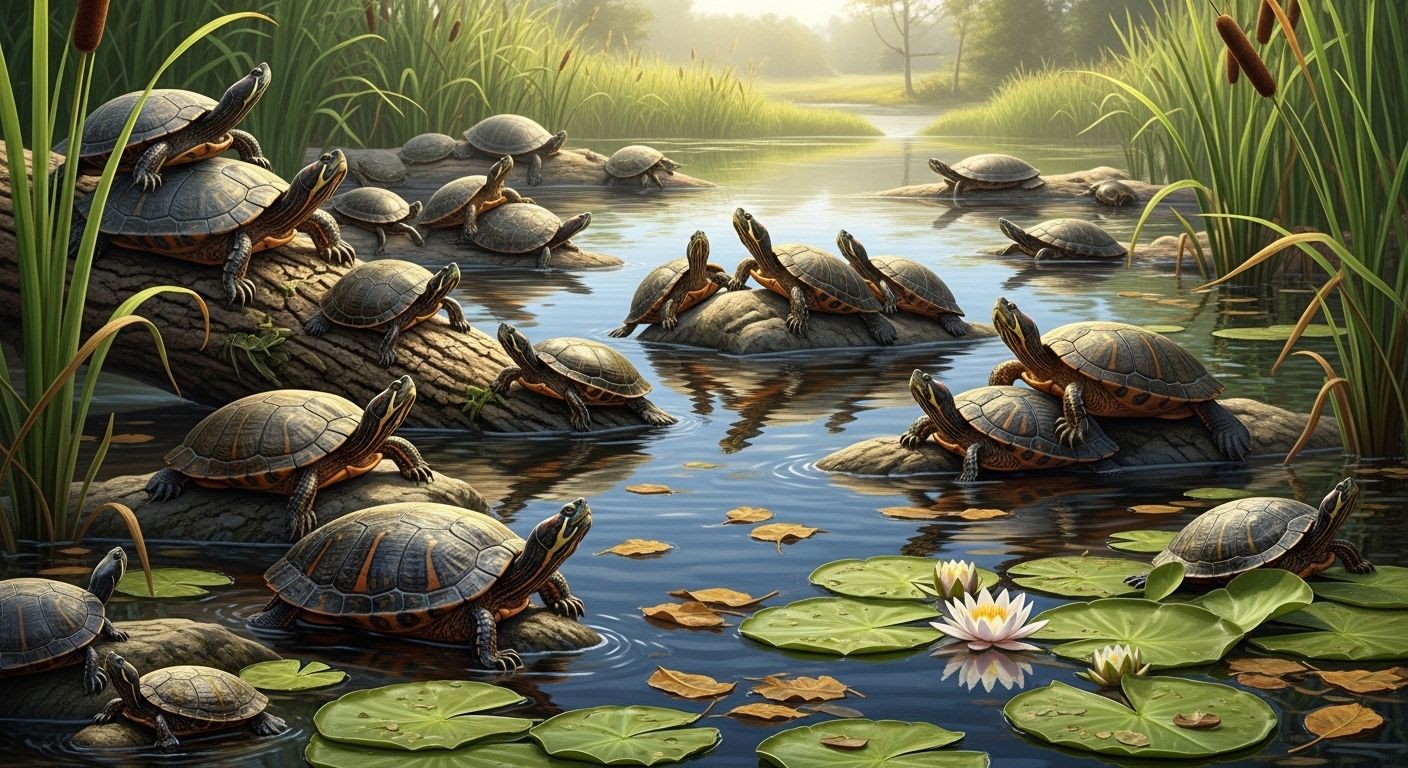
Ever seen a yellow-bellied slider just floatin’ like it’s on vacation in the Bahamas? That’s ‘cause its yellow bellied slider turtle habitat is dialed in. These little water-lovers ain’t your average pet—they need serious real estate, both wet and dry. A proper tank setup includes a large water zone (at least 10 gallons per inch of shell length [[8]]), a dry basking platform, UVB lighting, a submersible heater, and a filter that could handle a swamp. Seriously—these guys are messy eaters, so a canister filter rated for *twice* your tank size is non-negotiable. And don’t even think about skimpin’ on the basking lamp; without that warm, dry spot, they’ll get respiratory infections faster than you can say “shell rot.”
Do Yellow Belly Sliders Need Land? You Bet They Do.
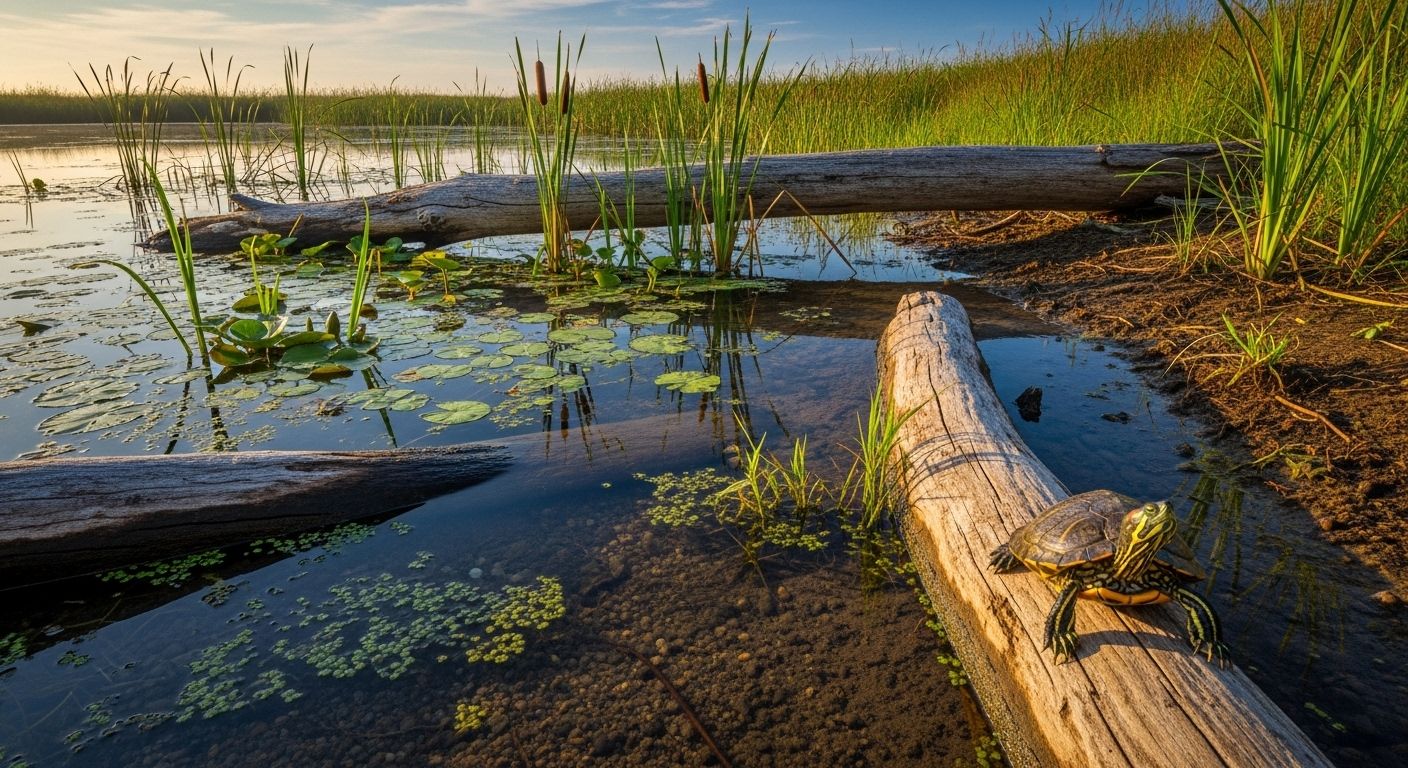
Despite bein’ aquatic turtles, yellow-bellied sliders absolutely *need* land—or at least a dry dock—in their yellow bellied slider turtle habitat. They haul out daily to bask under UVB rays, dry their shells, and regulate their body temp. No basking area? That’s like askin’ a human to sleep underwater. Not happenin’. The platform should be big enough for the whole turtle to stretch out, stable enough not to wobble, and positioned directly under a heat lamp (85–90°F) and a UVB 5.0 bulb [[14]]. Cork bark, floating docks, or custom-built ramps all work—but make sure it’s easy to climb. Slippery surfaces = stressed turtle = health nosedive.
Can Yellow Belly Turtles Go Outside? Only If You’re Careful
Sure, yellow-bellied sliders can enjoy the great outdoors—but only if your yellow bellied slider turtle habitat outside is secure, shaded, and supervised. They thrive in natural sunlight (which boosts vitamin D synthesis better than any bulb), but they’re also escape artists and snack targets for raccoons, birds, and neighborhood cats. If you’ve got a pond or kiddie pool in a fenced yard, you can let ‘em sunbathe for a few hours on warm days (70–90°F). But never leave ‘em unattended, and always bring ‘em in before dusk. And remember: wild-caught sliders should never be released—captive ones lack survival skills and can spread disease to native populations [[16]].
How Cold Can Yellow Belly Sliders Tolerate? Not Very.
These southern charmers hail from the Carolinas down to Florida, so they’re not built for frosty mornings. In their yellow bellied slider turtle habitat, water temps should stay between 75–80°F year-round [[11]]. If it drops below 65°F for more than a day or two, their metabolism slows, digestion halts, and they become vulnerable to illness. Unlike some turtles, they don’t truly hibernate—they just get sluggish and sick. So if you’re keepin’ one indoors (which most folks do), invest in a reliable submersible heater with a thermostat. And if you’re tempted to let ‘em “brumate” in a garage or shed? Don’t. It’s a gamble with a high chance of losin’ your pal.
Building the Perfect Indoor Tank Setup
Alright, y’all—let’s talk real talk. A baby yellow-bellied slider might start in a 20-gallon long tank, but adults need 75–125 gallons minimum [[9]]. Why? Because they grow fast—up to 8–10 inches—and they swim, explore, and poop like there’s no tomorrow. Your yellow bellied slider turtle habitat should have 70–80% water depth (at least as deep as the turtle is long), smooth substrate (or none at all—bare glass is easiest to clean), and zero sharp edges. Use a basking platform that takes up 20–30% of the surface area, and position lights so the basking zone hits 88–92°F while the water stays warm below. Oh, and that filter? Get one rated for 200+ gallons if you’re using a 100-gallon tank. Trust us—you’ll thank yourself later.
Lighting & Heating: The Invisible Lifelines
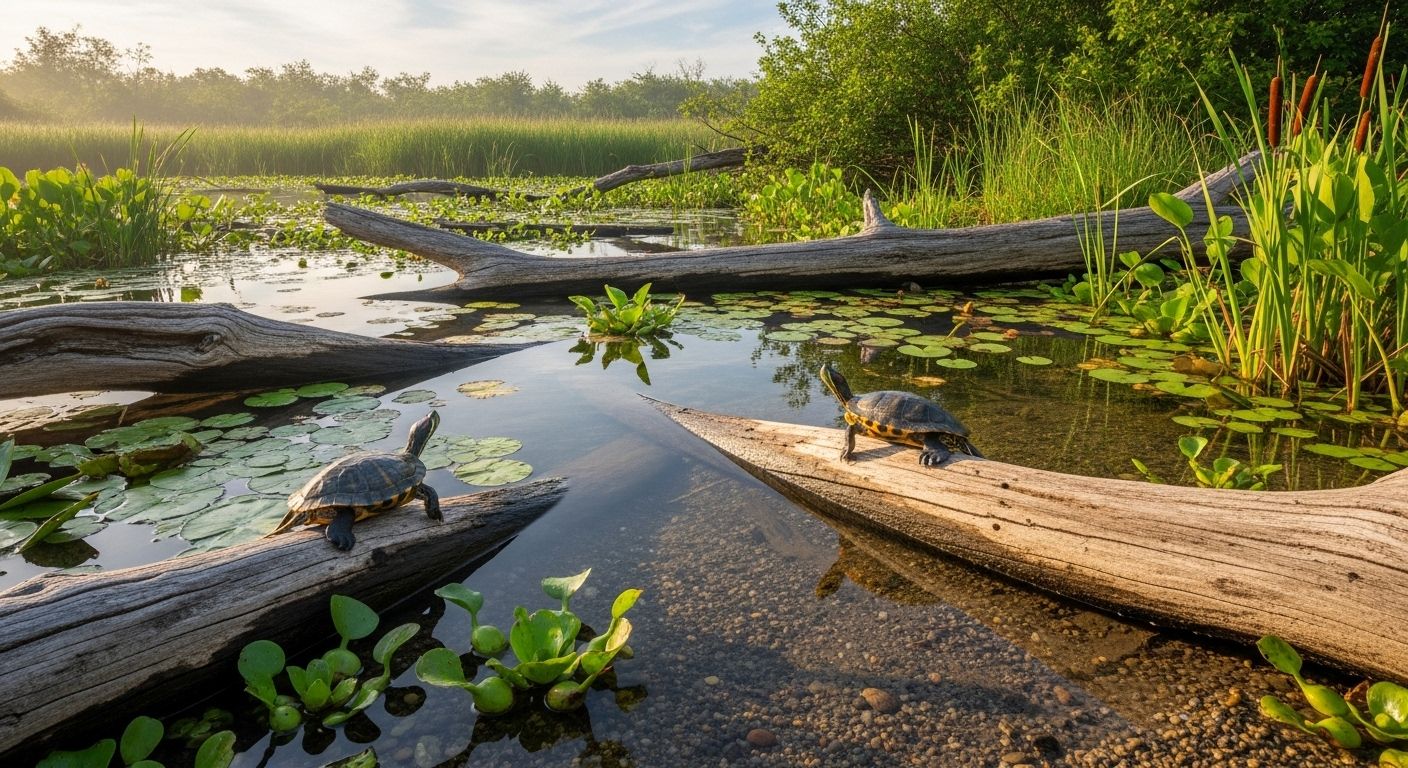
No UVB = no calcium absorption = soft shell = slow death. It’s that simple. Your yellow bellied slider turtle habitat must include a linear T5 HO UVB 5.0 bulb spanning half the enclosure, replaced every 6–12 months [[14]]. Pair it with a 75–100W basking bulb (not red or blue night bulbs—they’re useless). Water heaters should be guarded or external to prevent burns. And never place the tank in direct sunlight through a window—glass filters UVB and turns the tank into an oven. Lighting isn’t decor; it’s medicine. Treat it like one.
Water Quality: Because Nobody Likes Swamp Soup
Yellow-bellied sliders pee, poop, and eat in the same water they swim in. So unless you wanna scrub algae off the glass every other day, you need a heavy-duty filtration system. Canister filters (like Fluval FX4) or sump setups are gold standards. Perform 25–30% water changes weekly, and test parameters monthly: ammonia and nitrites should be 0 ppm, nitrates under 40 ppm [[19]]. Poor water quality causes shell rot, eye infections, and lethargy—so don’t treat your yellow bellied slider turtle habitat like a set-it-and-forget-it fish tank. This ain’t low-maintenance; it’s high-reward.
Diet & Feeding Zones: Keep It Clean, Keep It Balanced
Feed your slider in a separate container if possible—it keeps the main yellow bellied slider turtle habitat cleaner. Their diet shifts with age: juveniles need 50% protein (earthworms, krill, commercial pellets), 50% greens; adults need 70–80% veggies (kale, duckweed, collards), 20–30% protein [[20]]. Avoid iceberg lettuce, spinach (binds calcium), and processed meats. Offer food 4–5 times a week for adults, daily for babies. And always remove uneaten food within 15 minutes—rotting shrimp in warm water is a biohazard waiting to happen.
Common Mistakes That Turn Habitats Into Hazards
We’ve seen it all: gravel substrate (choking hazard), heat rocks (burn risk), tiny tanks labeled “starter kits” (marketing lies), and fake plants that shred into microplastics. One big oops? Using tap water straight from the hose—chlorine and chloramines irritate their eyes and skin. Always dechlorinate. Another? Skipping the basking area because “they seem fine swimming.” They’re not fine—they’re slowly deteriorating. Your yellow bellied slider turtle habitat must be functional first, pretty second. Lives depend on it.
Upgrading Your Habitat: From Basic to Brilliant
Ready to go pro? Add live aquatic plants (anacharis, water hyacinth), a drip system for oxygenation, or a DIY overflow filter. Swap plastic decor for driftwood and smooth river stones. And connect with the community: check out Sea Turtle Farm for seasonal care tips, browse the Habitat section for species-specific guides, or steal inspiration from Yellow Bellied Turtle Habitat Natural Vibe. Small upgrades today mean decades of health tomorrow—because these turtles can live 30+ years in captivity when cared for right.
Frequently Asked Questions
What do yellow belly turtles need in their tank?
A proper yellow bellied slider turtle habitat requires a large tank (75–125+ gallons for adults), 70–80% water depth, a dry basking platform, UVB 5.0 lighting, a basking heat lamp (85–90°F), submersible water heater (75–80°F), and a powerful filter. Clean, dechlorinated water and a balanced diet are also essential.
Do yellow belly sliders need land?
Yes—yellow-bellied sliders need a dry basking area in their yellow bellied slider turtle habitat to thermoregulate, dry their shells, and absorb UVB rays. Without it, they develop health issues like respiratory infections and metabolic bone disease.
Can yellow belly turtles go outside?
Yes, yellow-bellied sliders can go outside in a secure, supervised yellow bellied slider turtle habitat during warm weather (70–90°F). Ensure protection from predators, provide shade, and never leave them unattended or overnight.
How cold can yellow belly sliders tolerate?
Yellow-bellied sliders should not be exposed to temperatures below 65°F for extended periods. Their ideal yellow bellied slider turtle habitat maintains water at 75–80°F and basking zones at 85–90°F. Prolonged cold leads to illness and digestive shutdown.
References
- https://www.thesprucepets.com/yellow-bellied-slider-turtle-care-sheet-1238525
- https://www.reptilesmagazine.com/care-sheets/turtles-tortoises/yellow-bellied-slider-care-sheet/
- https://www.tortoisetrust.org/articles/slidercare.html
- https://wildlife.ca.gov/Conservation/Invasives/Species/Trachemys-scripta
- https://www.animaldiversity.org/accounts/Trachemys_scripta/
- https://www.petmd.com/reptile/care/evr_rept_ylw_bellied_slider_care_sheet
- https://www.vetmed.ucdavis.edu/giving/news/keeping-pet-turtles-healthy
- https://www.aquaticcommunity.com/yellow-bellied-slider.php
- https://www.turtlehobbyist.com/yellow-bellied-slider-care-guide/
- https://www.fws.gov/invasive/species/yellow-bellied-slider