Yellow Eared Slider Habitat Rare Setup
- 1.
What Size Tank Does a Yellow Eared Slider Need?
- 2.
Where Do Yellow-Eared Sliders Live in the Wild?
- 3.
How Big Can Yellow Belly Sliders Get? Bigger Than You Think
- 4.
Do Yellow Belly Sliders Need Land? Absolutely—They’re Not Fish!
- 5.
Building the Ideal Indoor Yellow Eared Slider Habitat
- 6.
Lighting & Heat: Non-Negotiables for Shell Health
- 7.
Water Quality: Because Nobody Wants a Swamp in Their Living Room
- 8.
Diet & Feeding: Balance Is Everything
- 9.
Common Pitfalls That Sabotage Your Habitat
- 10.
Leveling Up: From Basic to Brilliant
Table of Contents
yellow eared slider habitat
What Size Tank Does a Yellow Eared Slider Need?
Hold up—before you plop that cute little yellow-eared slider into a fishbowl the size of a coffee mug, lemme stop ya right there. These turtles ain’t goldfish; they’re growin’ machines with serious space demands. A proper yellow eared slider habitat starts at 40 gallons for a hatchling—but don’t get comfy. By age 3, they’ll need 75–125 gallons [[9]]. Rule of thumb? Ten gallons per inch of shell length. So if your slider’s clockin’ in at 8 inches (and they often do), you’re lookin’ at 80+ gallons minimum. And no, stacking tanks vertically don’t count—they swim horizontally, not like they’re trainin’ for the turtle Olympics. Give ‘em room to paddle, or prepare for stress, shell rot, and a whole lotta regret.
Where Do Yellow-Eared Sliders Live in the Wild?
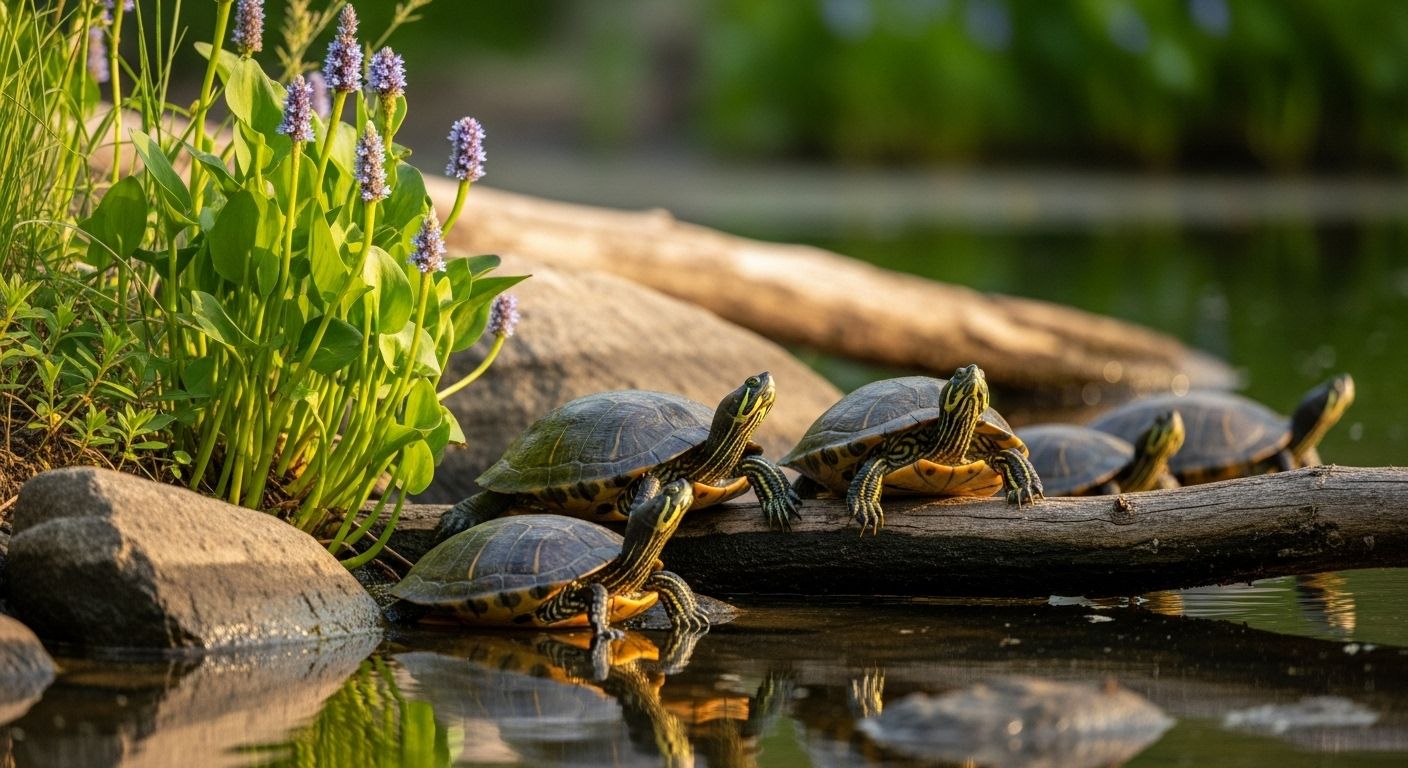
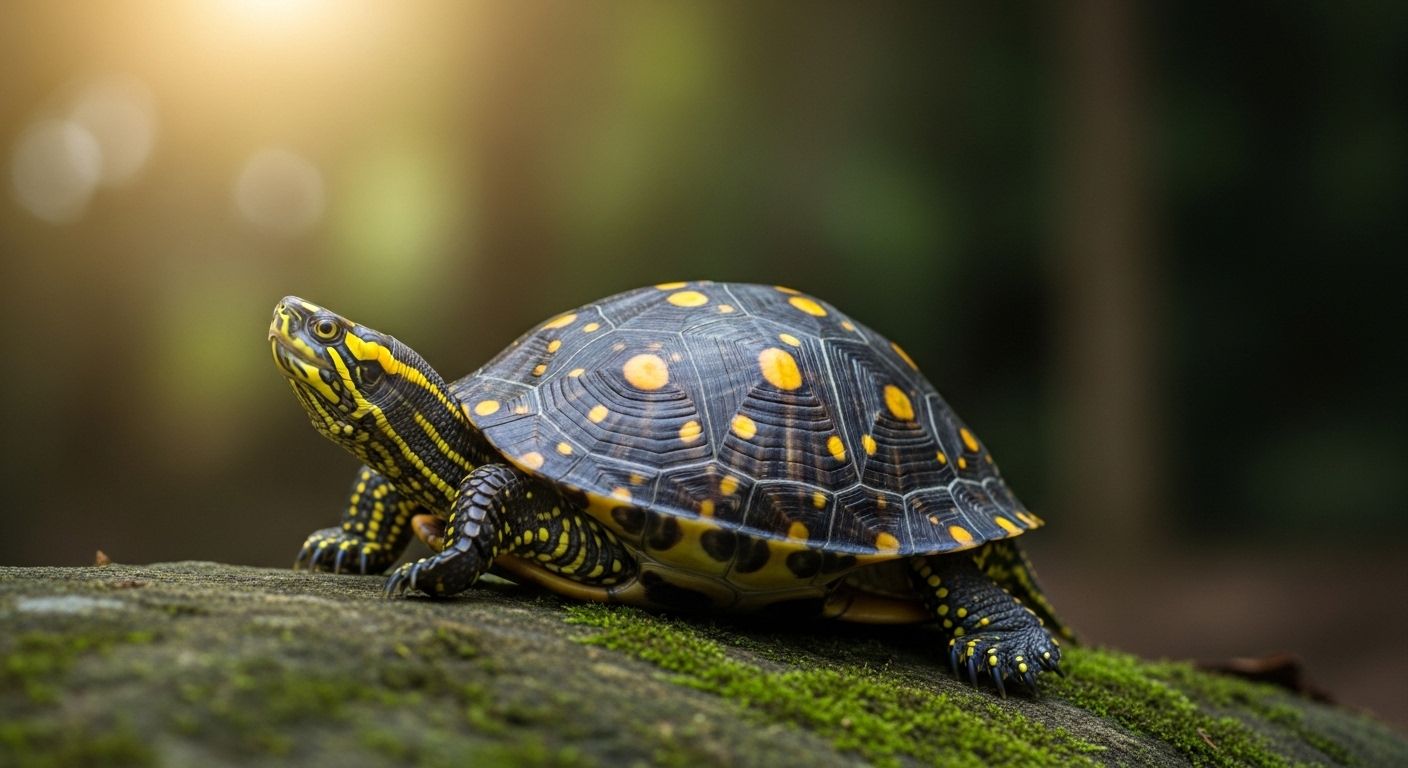
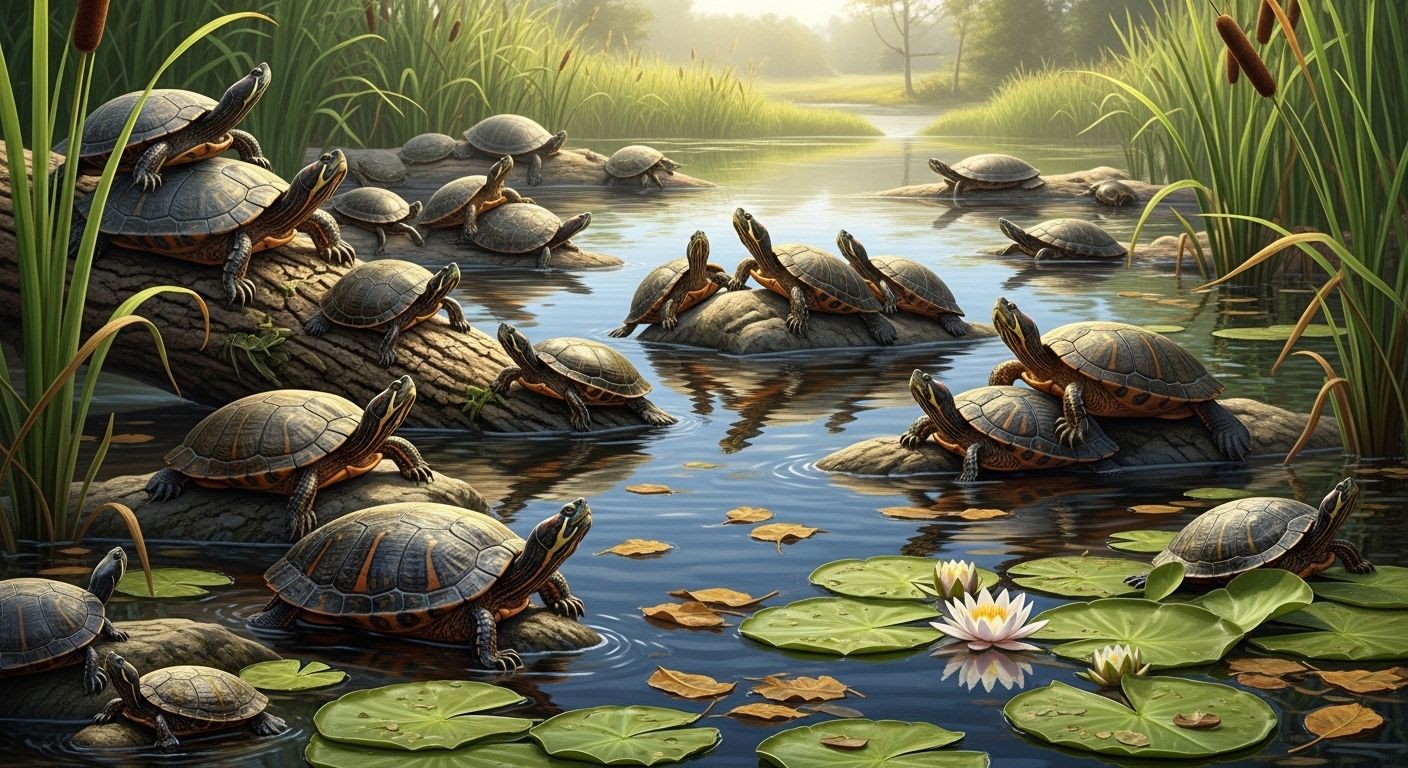
First off—fun fact: “yellow-eared slider” is actually a misnomer. The correct name is *yellow-bellied slider* (*Trachemys scripta scripta*); “yellow-eared” likely comes from folks mixin’ ‘em up with red-eared sliders. But hey, we get it—those golden cheek stripes are hard to miss. In the wild, these sun-lovin’ swimmers call the southeastern U.S. home: Georgia, South Carolina, Florida, all the way to Virginia [[6]]. They thrive in slow-moving rivers, marshes, ponds, and lakes with soft bottoms, plenty of basking logs, and dense shoreline vegetation. So when you’re buildin’ your yellow eared slider habitat, think swampy Southern charm—not desert minimalism.
How Big Can Yellow Belly Sliders Get? Bigger Than You Think
Don’t let that tiny hatchling fool ya. Yellow-bellied sliders can hit 8–10 inches in shell length, with females often outgrowing males [[11]]. Males stay sleeker (5–8 inches) but develop long front claws for courtin’. In captivity, with consistent food and warmth, they’ll max out faster than you can say “tank upgrade.” That’s why skimpin’ on enclosure size early on is a rookie mistake. Your yellow eared slider habitat must plan for adulthood, not just the cute baby phase. And yeah—they live 20–30 years, sometimes more. This ain’t a hamster; it’s a decades-long commitment wrapped in a golden shell.
Do Yellow Belly Sliders Need Land? Absolutely—They’re Not Fish!
Here’s the tea: yellow-bellied sliders are aquatic, sure—but they *must* haul out daily to dry off, warm up, and soak in UVB rays. Without a dry basking platform in your yellow eared slider habitat, they’ll develop fungal infections, respiratory issues, and metabolic bone disease faster than you can blink [[14]]. The platform should be stable, easy to climb, and take up 20–30% of the tank’s surface. Cork bark, floating docks, or custom-built ramps all work—but make sure it’s under a heat lamp (85–90°F) and a UVB 5.0 bulb. Water’s their highway, but land? That’s their spa day.
Building the Ideal Indoor Yellow Eared Slider Habitat
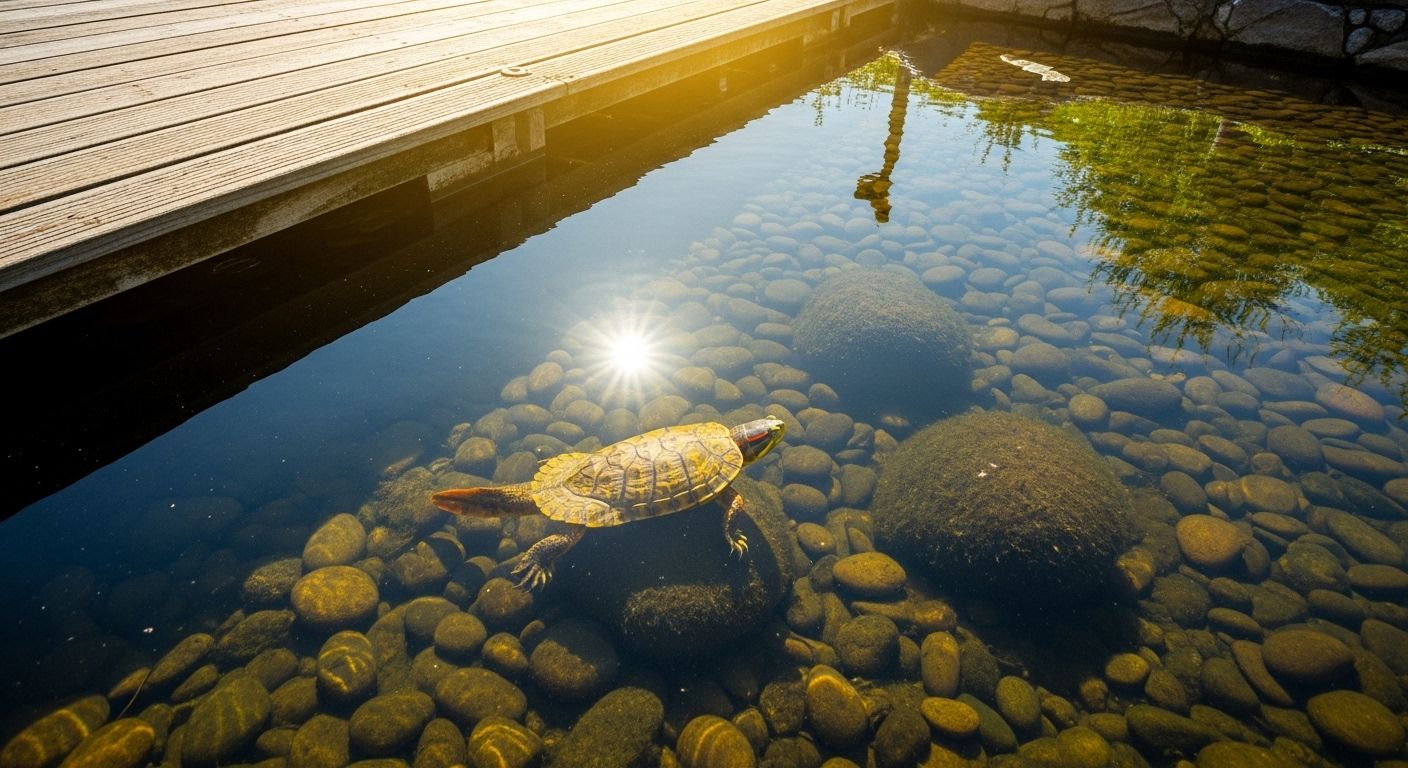
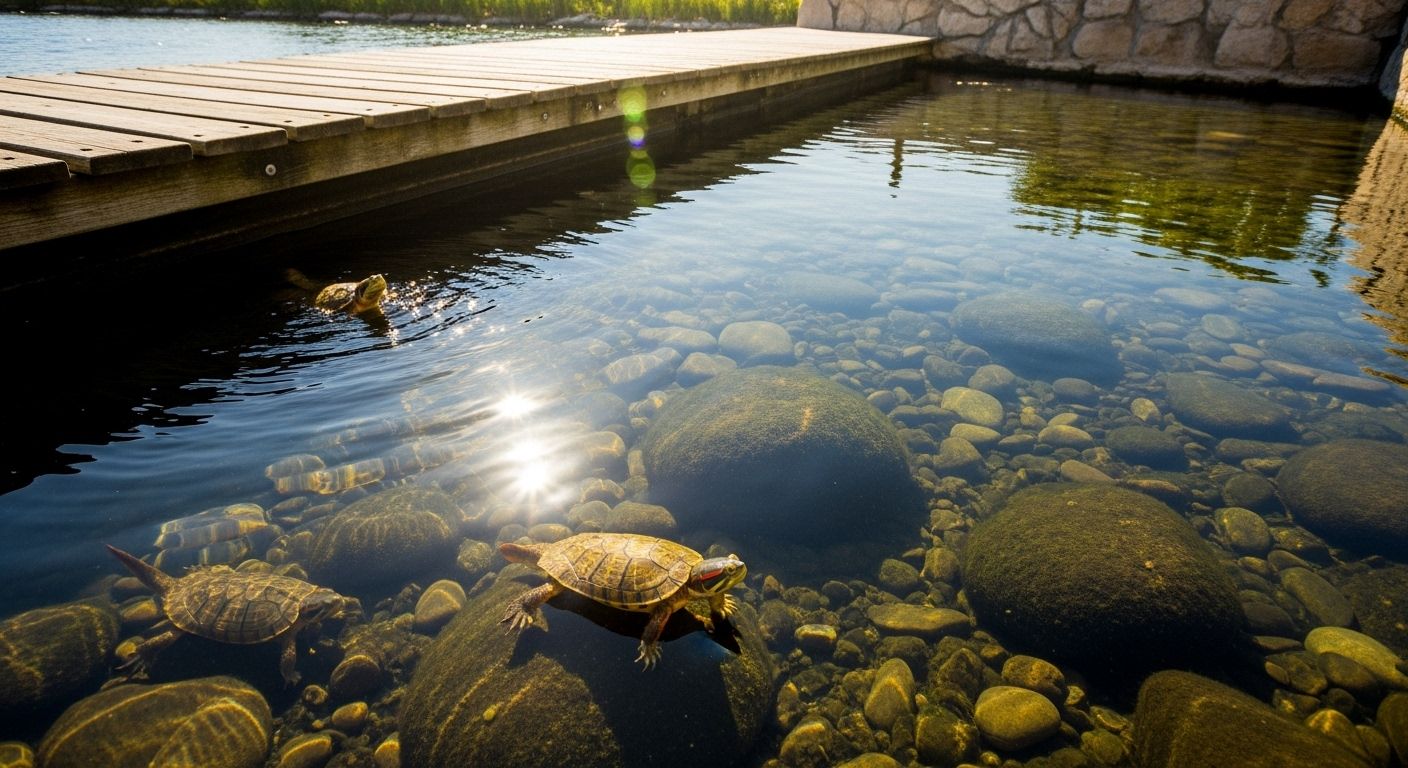
Alright, y’all—let’s build this thing right. Start with a 75-gallon long tank (or larger) for an adult. Fill it 70–80% with dechlorinated water, heated to 75–80°F via a submersible heater (guarded, please!). Add a powerful canister filter—rated for *at least* double your tank volume—because these guys eat, poop, and swim in the same soup. Then, install a basking dock under a combo of a 75W basking bulb and a linear T5 HO UVB 5.0 tube. Decor? Keep it simple: smooth river stones, driftwood, maybe some live plants like anacharis. No gravel—it’s a choking hazard. Your yellow eared slider habitat should feel like a lazy Southern creek: clean, warm, and full of sunshine.
Lighting & Heat: Non-Negotiables for Shell Health
No UVB = no calcium = soft, deformed shells. Period. Your yellow eared slider habitat must include a high-output UVB 5.0 fluorescent tube (not a coil!) spanning half the enclosure, replaced every 6–12 months even if it still glows [[14]]. Pair it with a basking lamp that hits 88–92°F on the dock. Water temps? Keep ‘em steady at 75–80°F year-round—no seasonal dips. These turtles don’t hibernate well in captivity, and cold = illness. And never, ever rely on sunlight through a window; glass blocks UVB and turns tanks into ovens. Lighting ain’t optional—it’s life support.
Water Quality: Because Nobody Wants a Swamp in Their Living Room
Yellow-bellied sliders are messy. Like, “eat-a-shrimp-and-leave-the-tail-floating” messy. So your yellow eared slider habitat needs filtration that laughs at chaos. A Fluval FX4 or equivalent canister filter is worth every penny (around $150–200 USD). Perform 25–30% water changes weekly, and test for ammonia (0 ppm), nitrites (0 ppm), and nitrates (<40 ppm) monthly [[19]]. Cloudy water? Foul smell? That’s your cue to deep-clean. Poor water quality leads to shell rot, eye infections, and lethargy—so treat your filter like the hero it is.
Diet & Feeding: Balance Is Everything
Baby sliders need 50% protein (earthworms, krill, quality pellets), 50% greens. Adults shift to 70–80% veggies (kale, duckweed, collards), 20–30% protein [[20]]. Avoid iceberg lettuce, spinach (binds calcium), and processed meats. Feed adults 4–5 times a week, babies daily—and always remove leftovers within 15 minutes. Pro tip: feed in a separate tub to keep your main yellow eared slider habitat cleaner. And never skip calcium supplements; dust food with reptile-safe calcium powder 2–3x/week. A healthy diet = a vibrant shell and bright eyes.
Common Pitfalls That Sabotage Your Habitat
We’ve seen folks use gravel (choking hazard), heat rocks (burn risk), tiny “starter kits” (marketing traps), and fake plants that shed microplastics. Another big oops? Skipping the basking area because “they seem fine swimming.” They’re not fine—they’re slowly deteriorating. Also, never use tap water straight from the hose—chlorine irritates their eyes. Always dechlorinate. Your yellow eared slider habitat must prioritize function over flash. Lives depend on it.
Leveling Up: From Basic to Brilliant
Ready to go pro? Add live aquatic plants (water hyacinth, hornwort), a drip system for oxygenation, or a DIY overflow filter. Swap plastic decor for natural driftwood. And connect with the community: swing by Sea Turtle Farm for care sheets, dive into the Habitat section for species-specific builds, or steal ideas from African Sideneck Turtle Habitat Exotic Look. Small upgrades today mean decades of health tomorrow—because these turtles ain’t just pets; they’re family.
Frequently Asked Questions
What size tank does a yellow eared slider need?
A yellow eared slider needs a minimum of 75–125 gallons for an adult, following the rule of 10 gallons per inch of shell length. Hatchlings start in 40 gallons but outgrow it quickly. The yellow eared slider habitat must provide ample swimming space and a dry basking area.
Where do yellow-eared sliders live?
True yellow-bellied sliders (often called yellow-eared sliders) live in the southeastern United States—Georgia, South Carolina, Florida, and Virginia—in slow-moving freshwater habitats like ponds, marshes, and creeks. Their ideal yellow eared slider habitat mimics these warm, vegetated, sun-dappled environments.
How big can yellow belly sliders get?
Yellow belly sliders can reach 8–10 inches in shell length, with females typically larger than males. In a well-maintained yellow eared slider habitat, they grow steadily and may live 20–30+ years, requiring long-term planning for space and care.
Do yellow belly sliders need land?
Yes—yellow belly sliders require a dry basking platform in their yellow eared slider habitat to regulate body temperature, dry their shells, and absorb UVB radiation. Without land, they develop serious health issues like respiratory infections and metabolic bone disease.
References
- https://www.thesprucepets.com/yellow-bellied-slider-turtle-care-sheet-1238525
- https://www.reptilesmagazine.com/care-sheets/turtles-tortoises/yellow-bellied-slider-care-sheet/
- https://www.tortoisetrust.org/articles/slidercare.html
- https://wildlife.ca.gov/Conservation/Invasives/Species/Trachemys-scripta
- https://www.animaldiversity.org/accounts/Trachemys_scripta/
- https://www.petmd.com/reptile/care/evr_rept_ylw_bellied_slider_care_sheet
- https://www.vetmed.ucdavis.edu/giving/news/keeping-pet-turtles-healthy
- https://www.aquaticcommunity.com/yellow-bellied-slider.php
- https://www.turtlehobbyist.com/yellow-bellied-slider-care-guide/
- https://www.fws.gov/invasive/species/yellow-bellied-slider